
Antibiotics and Painkillers in Wisdom Tooth Recovery
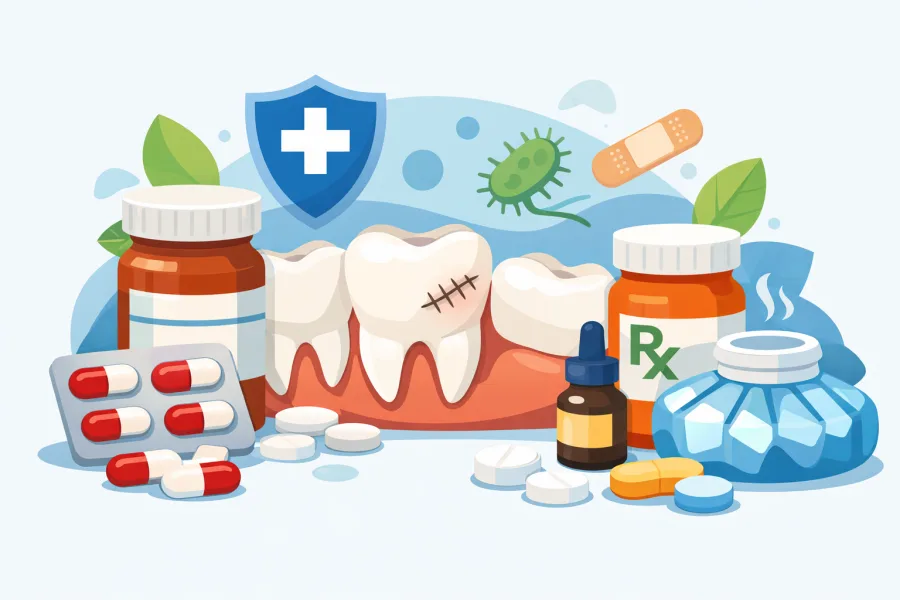
Leaving the surgical suite after having your third molars removed comes with a mixture of relief and uncertainty. You are handed prescriptions for pain relief and possibly an antibiotic, but many patients are unsure how to take them safely or whether every medication is truly necessary. Navigating post-operative recovery does not have to be a guessing game. When managed with precision, modern pharmacological protocols keep surgical discomfort minimal while protecting your body from unwanted side effects.
Understanding how analgesics reduce inflammation, when antibiotics are clinically indicated, and how to safely schedule your doses ensures a seamless, comfortable healing process.
1. Multimodal Analgesia: Why Combining Medications Outperforms Opioids
For decades, patients assumed that recovering from wisdom tooth surgery required heavy narcotic painkillers. Today, clinical research in oral and maxillofacial surgery has demonstrated that a multimodal analgesia approach combining non-steroidal anti-inflammatory drugs (NSAIDs) with acetaminophen provides superior pain relief with far fewer side effects like nausea, dizziness, or constipation.
These two medications target surgical discomfort through entirely different biological pathways:
- Ibuprofen (Advil, Motrin): As an NSAID, ibuprofen blocks the cyclooxygenase (COX) enzymes that produce prostaglandins, the local chemicals responsible for surgical swelling, heat, and throbbing pain at the extraction socket.
- Acetaminophen (Tylenol): Acetaminophen acts primarily within the central nervous system to elevate your overall pain threshold, reducing how intensely your brain registers pain signals.
- The Staggered Dosing Protocol: Rather than taking them simultaneously, your surgeon may recommend staggering them every three to four hours (for example, taking 600 mg of ibuprofen at 8:00 AM, 500 mg to 1,000 mg of acetaminophen at 11:00 AM, and repeating). This maintains steady blood concentration levels and prevents pain spikes.
The Preemptive Dose: The most crucial timing rule is to take your first dose of pain medication while your mouth is still completely numb from local anesthesia. Once surgical numbness wears off, controlling acute pain becomes much harder if the inflammatory cascade has already begun.
2. Antibiotic Stewardship: When Are Antibiotics Truly Necessary?
A widespread misconception is that every wisdom tooth extraction requires an automatic round of systemic antibiotics. In routine extractions where the tooth has fully erupted, prophylactic antibiotics offer little clinical benefit and carry real risks of disrupting your gut microbiome, triggering allergic reactions, or cultivating drug-resistant bacteria.
Oral and maxillofacial surgeons practice strict antibiotic stewardship, prescribing medications such as amoxicillin (or clindamycin/azithromycin for penicillin-allergic patients) only under specific clinical circumstances:
| Medication Class | Primary Purpose | Standard Clinical Schedule | Best Practices & Precautions |
|---|---|---|---|
| NSAID (Ibuprofen) | Controls local inflammation, soft tissue swelling, and throbbing pain. | 600 mg to 800 mg every 6 to 8 hours as needed. | Always take with food or a glass of milk to protect gastric lining. |
| Acetaminophen (Tylenol) | Centrally acting analgesic that raises the overall pain threshold. | 500 mg to 1,000 mg every 6 hours (max 3,000 mg/day). | Do not combine with other acetaminophen-containing medications to protect liver health. |
| Prescription Opioid | Rescue medication for severe breakthrough pain in deep bony impactions. | Use only during the first 24 to 48 hours if non-narcotics are insufficient. | Avoid driving, operating machinery, or consuming alcohol while taking opioids. |
| Oral Antibiotics | Eliminates bacterial infection in complex bony impactions or pre-existing pericoronitis. | Complete the entire prescribed 5 to 7 day course without skipping. | Never stop early just because symptoms improve; consider probiotics after completion. |
Deeply impacted lower wisdom teeth requiring significant bone removal, active preoperative gum infections (pericoronitis), or patients with compromised immune systems represent clear indications for antibiotics. If an antibiotic is prescribed, you must complete the entire course. Discontinuing antibiotics early because you feel better leaves the hardiest bacteria alive to rebound and multiply.
3. Protecting Your Health: Safe Dosing and Drug Interactions
Safe medication management requires staying mindful of dosages, drug combinations, and non-pharmacological support:
- Watch the Acetaminophen Ceiling: The maximum safe daily dose of acetaminophen is 3,000 mg to 4,000 mg for healthy adults. If your surgeon prescribes a combination narcotic (such as Norco or Percocet), remember that these tablets already contain 325 mg of acetaminophen. Taking over-the-counter Tylenol on top of a combination opioid can lead to accidental liver toxicity.
- Protect Your Stomach: NSAIDs can cause gastric irritation or heartburn if swallowed on an empty stomach. Even on a liquid diet, drink a smoothie, yogurt, or protein shake before taking your ibuprofen.
- Zero Alcohol: Alcohol must never be consumed alongside prescription pain relievers or antibiotics. Combining alcohol with acetaminophen strains liver metabolism, while combining it with opioids causes life-threatening respiratory depression.
- Ice and Elevation: Medications are only half the recovery equation. Apply cold packs to your cheeks for 20 minutes on and 20 minutes off during the first 48 hours to blunt tissue distention. Sleeping with your head elevated on two pillows prevents fluid from pooling in facial tissues.
4. Warning Signs and Consultation with Dr. Johanny Caceres
Distinguishing normal post-surgical discomfort from a complication ensures you receive the right care without delay:
- Expected Healing: Mild to moderate soreness and swelling that peak between days 2 and 3 and steadily diminish by day 4 or 5.
- Dry Socket (Alveolar Osteitis): A sudden, throbbing pain that erupts on day 3, 4, or 5, radiating toward your ear, often accompanied by foul breath. This is not an infection and does not respond to antibiotics. It is easily treated in our office in minutes with a soothing medicated dressing.
- Signs of Infection: Swelling that progressively worsens after day 3, a persistent fever over 101.5°F, foul-tasting pus draining from the socket, or difficulty swallowing and breathing.
At our practice, Dr. Johanny Caceres is a board-certified oral and maxillofacial surgeon dedicated to making your surgical extraction as comfortable and predictable as possible. Located in Coral Gables, our practice designs customized recovery plans tailored to your specific anatomical situation and medical history.
To learn more about what to expect after surgery, explore our guides on preventing dry socket, recognizing when wisdom tooth pain is an emergency, and our clinical protocols on preventing infection after extractions.
If you are planning your wisdom teeth removal or need expert post-operative guidance, contact our team directly at (305) 552-1193 or reserve your appointment online through our consultation booking page.