
Rhinoplasty is one of the most anatomically intricate procedures in facial surgery, requiring an exacting balance between external aesthetic balance and uncompromised internal respiratory function. Because the nose occupies the geometric center of the face, subtle variations in dorsal height, tip projection, or columellar angulation profoundly influence overall facial proportions. At Oral and Facial Surgery of Miami, board-certified surgeon Dr. Johanny Caceres integrates rigorous maxillofacial training with advanced aesthetic rhinoplasty in Coral Gables, ensuring structural stability, airway preservation, and natural results tailored to each patient.
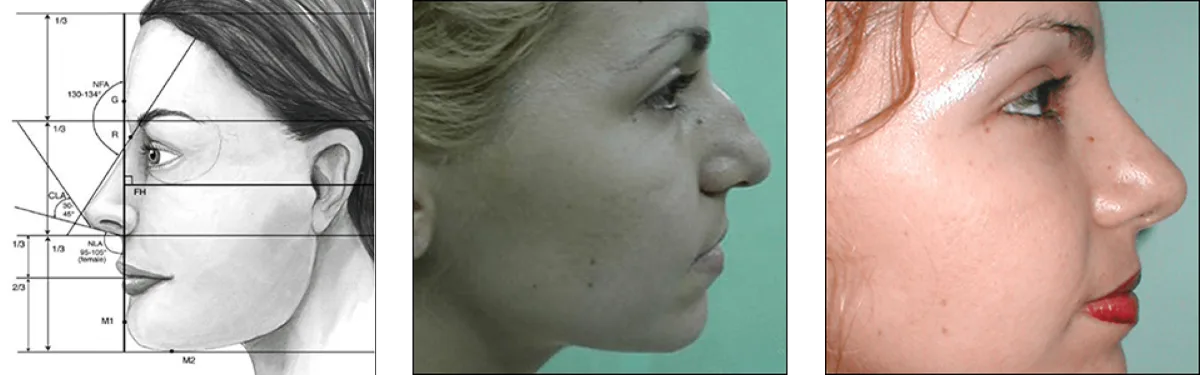
Structural Anatomy and Dual Functional-Cosmetic Objectives of Rhinoplasty
The external nasal framework comprises rigid paired nasal bones superiorly, semi-flexible upper lateral cartilages in the middle third, and delicate lower lateral (alar) cartilages defining the tip and nostrils. Overlying skin thickness varies substantially from the thin, mobile cephalic bridge to the sebaceous, adherent caudal tip. Altering any structural component triggers immediate hemodynamic and aerodynamic changes within the underlying nasal passages.
Successful rhinoplasty never prioritizes superficial aesthetics at the expense of breathing. A reduced nasal dorsum that appears refined in photographs can induce devastating internal nasal valve collapse if structural cartilaginous spreader grafts are omitted. Dr. Caceres approaches every surgical plan by evaluating both external nasal landmarks and internal airflow dynamics to achieve harmony that functions effortlessly for life.
Open versus Closed Surgical Approaches and Cartilage Grafting
Surgeons classify rhinoplasty primarily by the incision pathway utilized to access the cartilaginous and bony vault. In closed (endonasal) rhinoplasty, all incisions remain strictly within the interior vestibule of the nostrils. This approach avoids external cutaneous scarring and minimizes post-operative tip edema, making it well-suited for targeted dorsal humpectomy or moderate bridge refinement.
Open (external) rhinoplasty incorporates an inconspicuous inverted-V incision across the narrowest portion of the columella, linking with bilateral marginal rim incisions. This allows the surgeon to elevate the nasal soft tissue envelope, exposing the cartilaginous framework directly. Direct visualization enables micro-millimeter precision when placing structural autologous cartilage grafts, carving columellar struts, and suturing alar domes for lasting rotational control.
| Surgical Technique | Incision Location | Ideal Clinical Candidate | Airway & Structural Stability |
|---|---|---|---|
| Open Structural Rhinoplasty | Transcolumellar and marginal rim incisions | Complex dorsal asymmetry, revision surgery, and tip refinement | Direct anatomic exposure; optimal structural grafting control |
| Closed Endonasal Rhinoplasty | Internal vestibule only; zero skin cuts | Isolated bony dorsal hump reduction and minor bridge adjustments | No external scar; reduced edema; limited access for tip grafting |
| Functional Septorhinoplasty | Combined columellar and internal septal access | Deviated nasal septum, nasal valve collapse, and chronic obstruction | Simultaneous cosmetic improvement with permanent airway expansion |
| Preservation Rhinoplasty | Subperichondrial / subperiosteal tunnel plane | Patients with attractive native dorsum seeking lower profile | Maintains native dorsal lines; lowers risk of middle vault collapse |
Airway Preservation, Septoplasty and Internal Valve Correction
The internal nasal valve constitutes the narrowest bottleneck for laminar airflow in the entire human respiratory tract. Bound by the nasal septum, upper lateral cartilage, and the head of the inferior turbinate, an angle of ten to fifteen degrees must be preserved. When patients present with chronic mouth breathing, nasal whistling, or unilateral obstruction, septoplasty and inferior turbinate reduction are integrated into the cosmetic plan.
Harvested septal cartilage serves as the gold standard biological grafting medium. Rather than discarding deviated septum, Dr. Caceres crafts precision spreader grafts to widen constricted valve angles, shield grafts to articulate the infratip lobule, or alar batten grafts to reinforce weak sidewalls prone to inspiratory collapse. This bio-architectural approach guarantees that structural definition never compromises uninhibited breathing.
Post-Surgical Healing Timeline, Splinting and Refinement Outcomes
Recovery proceeds along a structured biological curve. An external thermoplastic splint shields the newly positioned bones and cartilages for six to eight days. Periorbital bruising and initial swelling peak at forty-eight hours, fading significantly within ten days. Most patients return to desk work and social engagements after one week once external splints and protective tape are removed in the office.
While eighty percent of edema resolves over six to eight weeks, final cartilaginous refinement continues across twelve full months as thick nasal skin adapts to the underlying scaffold. To explore personalized rhinoplasty options with board-certified oral and maxillofacial surgeon Dr. Johanny Caceres, contact our Coral Gables practice at (305) 552-1193 or schedule a personal evaluation through our online booking form.
Ready for your visit?
Our surgical team performs all procedures under local anesthesia, nitrous oxide, or IV sedation in Coral Gables.