
Food Stuck in Wisdom Tooth Hole? What You Should Do
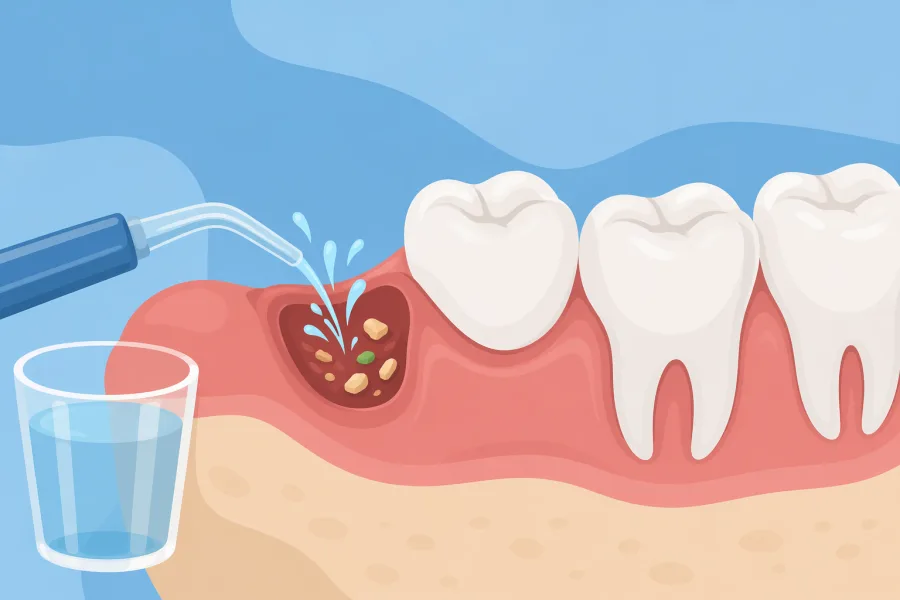
Following wisdom tooth extraction, noticing food particles lodged inside the healing socket is one of the most common concerns patients experience. As you transition back to solid foods around day four or five, small crumbs like rice grains, seeds, or bread particles easily drop into the open bony hollow. While this can feel unsettling, knowing how to clean the socket safely prevents complications and promotes uneventful healing.
At Oral and Facial Surgery of Miami, board-certified oral and maxillofacial surgeon Dr. Johanny Caceres educates patients on proper socket maintenance. Using correct irrigation methods ensures your extraction site stays clean without disrupting delicate reparative tissues.
Extraction Socket Anatomy and Why Food Collects
When a large molar is extracted from the jaw, a void remains in the alveolar bone where the roots used to reside. In the initial hours after surgery, this space fills with a dense blood clot. Over the subsequent two to four weeks, specialized cells transform this clot into vascularized granulation tissue, which gradually ossifies into new bone over several months.
Gum tissue heals from the bottom and sides outward, leaving an open indent or crater visible for several weeks. Because mastication pushes food boluses toward the back of the mouth, debris naturally settles into this anatomical pocket. Although mild trapped debris is common, allowing dense carbohydrates or fibrous meats to ferment inside the socket creates bad breath, unpleasant tastes, and potential bacterial infection.
| Cleaning Technique | Safety Status | Appropriate Post-Op Window | Mechanism of Action |
|---|---|---|---|
| Curved Irrigation Syringe | Safe and Recommended | Starting Day 5 after surgery | Flushes debris upward with gentle warm saline streams |
| Passive Warm Salt Water Bath | Safe and Recommended | Starting Day 2 after surgery | Loosens superficial particles without hydraulic pressure |
| Toothpicks or Metal Probes | Dangerous (Strictly Avoid) | Never | Punctures granulation bed, causes bleeding and dry socket |
| Commercial Water Flossers | High Risk of Tissue Damage | Wait at least 4 to 6 weeks | Excessive water pressure blasts developing tissue out of socket |
Safe Flushing Techniques: The Curved Syringe Method
Starting approximately five days after surgery, once the preliminary clot has transformed into resilient granulation tissue, Dr. Caceres recommends using a curved plastic irrigation syringe. This specialized tool enables you to direct a controlled, low-pressure stream of fluid straight into the socket.
To irrigate safely, fill the syringe with lukewarm tap water or warm salt water. Place the curved plastic tip gently just above the socket opening, without poking deep into the hole. Depress the plunger smoothly to flush water into the base of the socket, allowing the escaping fluid to lift trapped particles to the surface. Repeat this gentle flush after every meal until the water runs clear.
Actions to Avoid: Toothpicks, Probing, and Harsh Suction
When a piece of food feels firmly wedged, patients may feel tempted to dig it out using household tools such as wooden toothpicks, cotton swabs, dental picks, or even fingers. You must strictly avoid probing the socket. Sharp or unsterilized objects can lacerate delicate healing tissues, puncture through the protective granulation layer, and introduce harmful bacteria directly into the porous bone.
Similarly, avoid creating intense intraoral suction. Do not suck vigorously on the extraction site with your tongue, use drinking straws, or run motorized water flossers directly into the surgical defect. If warm saline flushes do not immediately release a trapped piece of food, remain calm. The body naturally pushes superficial debris upward as new tissue builds from the base of the socket.
Recognizing Complications and When to Contact OFS Miami
In most cases, food entrapment is a temporary mechanical nuisance easily managed with post-meal irrigation. However, persistent trapped organic matter can occasionally trigger localized infection or secondary inflammation.
Contact our office if you experience severe throbbing pain radiating toward your ear, persistent foul discharge, worsening facial swelling after day four, or fever. At our practice, Dr. Johanny Caceres and our team are always available to evaluate your healing site, provide gentle professional debridement, and ensure your recovery stays entirely on track.
Have questions about your post-extraction recovery? Call Oral and Facial Surgery of Miami at (305) 552-1193 or book your follow-up online today.