
Best Age to Remove Wisdom Teeth: Dentist’s Guide
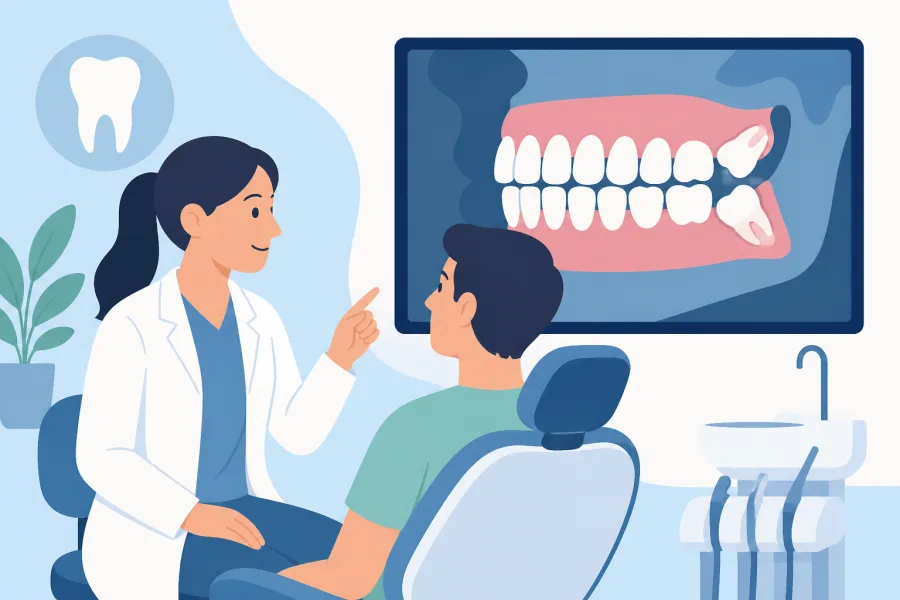
Timing is one of the most decisive factors in the success, ease, and comfort of wisdom tooth extraction. Many parents wonder whether they should schedule their teenager's third molar removal before college, while adult patients frequently ask if they are "too old" to have troublesome wisdom teeth removed safely. While third molars can be extracted at virtually any adult age when clinically necessary, human biology provides a distinct chronological window where surgical risks are lowest and regenerative healing is fastest.
At Oral & Facial Surgery of Miami, board-certified oral and maxillofacial surgeon Dr. Johanny Caceres evaluates patients of all ages, from adolescents undergoing proactive screening to mature adults addressing chronic impaction complications. Understanding how age alters jawbone density, root morphology, and nerve proximity empowers patients and families to make informed, timely healthcare choices.
1. The Biological Sweet Spot: Root Formation and Bone Elasticity Between Ages 15 and 25
In maxillofacial surgery, the late teenage years through the early twenties (approximately ages 15 to 25) are widely recognized as the ideal window for third molar management. This timing is rooted in surgical biology:
Incomplete Root Development: Third molar roots do not form all at once. During adolescence, the crown develops first, followed by gradual elongation of the root trunks. The ideal time to extract an impacted molar is when its roots are between one-third and two-thirds formed. At this developmental stage, the blunt, open root tips sit safely distant from the inferior alveolar nerve canal, dramatically reducing the risk of temporary or permanent paresthesia (nerve numbness).
Viscoelastic Bone Flexibility: The alveolar bone in teenagers and young adults is biologically pliable and less mineralized than adult bone. This natural elasticity allows an oral surgeon to gently expand the socket and elevate the tooth with minimal force and minimal bone removal (osteotomy). Younger patients also possess robust cellular turnover, meaning post-operative swelling subsides rapidly, bone fills the socket completely, and dry socket rates are minimal.
2. Adult Wisdom Tooth Surgery: Navigating Bone Density, Hypercementosis, and Ankylosis
While preventive extraction in the late teens is ideal, millions of adults retain their wisdom teeth well into their thirties, forties, fifties, and beyond. Often, patients delay surgery because their third molars were asymptomatic during youth. However, the biological environment changes progressively over time.
After age 25 to 30, the human skeleton completes its maturation. Mandibular cortical bone becomes exceptionally dense, rigid, and brittle. In addition, mature wisdom teeth have fully formed, often hook-shaped (dilacerated) root tips that sit directly against or wrap around the mandibular nerve sheath. Over decades of chronic low-grade inflammation, mature teeth can develop hypercementosis (excessive bulbous cementum deposits around the root tips) or ankylosis (direct fusion of root dentin to surrounding jawbone). These physiological changes require specialized surgical sectioning and meticulous debridement to remove safely.
| Clinical Parameter | Adolescents / Young Adults (Ages 15 to 24) | Mature Adults (Ages 25 and Above) |
|---|---|---|
| Root Morphology | Partial root formation (1/3 to 2/3 formed); blunt, open apices | Complete root length; frequent curved roots or hypercementosis |
| Surrounding Bone Quality | Pliable, resilient, less mineralized, heals quickly | Highly dense, sclerotic cortical bone; slower remodeling |
| Nerve Canal Proximity | Root tips remain distant from the inferior alveolar canal | Root apices frequently abut, groove, or encircle nerve sheath |
| Periodontal Healing | Full bone regeneration distal to neighboring second molar | Higher risk of residual periodontal pocketing behind 2nd molar |
| Typical Recovery Period | 3 to 5 days for full return to school, work, and normal activities | 5 to 7+ days; prolonged jaw stiffness and edema |
3. Surgical Risk Profiles by Age: Nerve Safety and Periodontal Regeneration
Epidemiological studies published in the Journal of Oral and Maxillofacial Surgery consistently demonstrate that complication rates increase with advancing chronological age. While temporary nerve sensory disturbances occur in less than 1 percent of teenage patients, the risk rises to 2 to 4 percent in adults over 30 due to mature root elongation.
Another critical age-related factor is periodontal health behind the second molar. When impacted wisdom teeth are removed before age 25, the body readily regenerates new alveolar bone and tightly reattaches gum tissue to the back of the second molar. In older adults whose wisdom teeth have caused chronic pericoronal inflammation for years, removing the tooth can leave a permanent deep periodontal pocket (bony defect) that leaves the second molar susceptible to future bone loss and decay.
4. Precision 3D Evaluation, Custom Timing, and Care at OFS Miami
The ideal time to evaluate wisdom teeth is during a routine panoramic screening between ages 15 and 18. At Oral & Facial Surgery of Miami, Dr. Johanny Caceres utilizes 3D Cone Beam Computed Tomography (CBCT) to capture cross-sectional views of the developing third molars. This advanced imaging reveals exact root lengths, angulation trajectories, and spatial relationships to the mandibular canal long before symptoms emerge.
If you are an adult struggling with recurrent wisdom tooth infections, cysts, or decay, do not let fear of your age prevent you from seeking care. While adult extractions are more intricate, Dr. Caceres applies advanced surgical techniques, including intentional coronectomy (removing the crown while leaving nerve-adjacent roots intact), platelet-rich fibrin (PRF) biologics, and bone grafting to ensure uneventful healing. Under customized IV sedation, patients of every age enjoy a tranquil, comfortable, and painless experience.
Whether you are planning preventive surgery for your adolescent or seeking relief from adult molar pain, expert guidance makes all the difference. Contact Oral & Facial Surgery of Miami today at (305) 552-1193 or schedule your consultation online for specialized surgical care.