
Can Wisdom Teeth Return After Being Pulled?
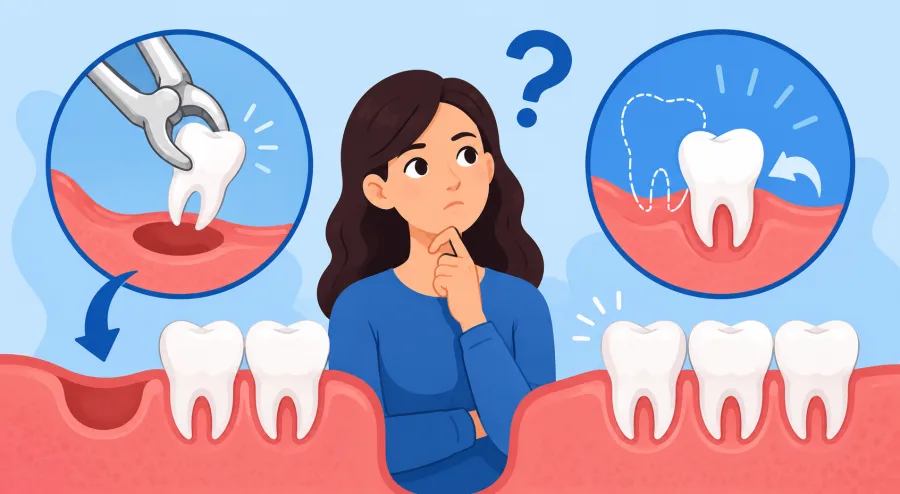
Months or even years after undergoing third molar extraction, feeling a sharp, hard white structure poking through the gum tissue can be deeply alarming. Many patients immediately panic, wondering if their wisdom tooth was incompletely removed or if human teeth possess an unexpected ability to regenerate. The straightforward biological truth brings instant reassurance: once an adult wisdom tooth is extracted, it cannot biologically regrow.
However, the human oral cavity undergoes intricate, prolonged remodeling following surgical tooth extraction. Bone remodeling, migrating root tips, and rare developmental anomalies can create sensations and visible symptoms that mimic tooth regrowth. At Oral and Facial Surgery of Miami, board-certified oral and maxillofacial surgeon Dr. Johanny Caceres provides chairside clarity and advanced diagnostic imaging to diagnose exactly what is occurring beneath the gumline.
1. The Biology of Human Dentition: Why Permanent Teeth Never Regenerate
To understand why wisdom teeth cannot grow back, one must examine human dental embryology. Humans are diphyodont organisms, meaning our genetic blueprint permits only two successive sets of teeth: primary deciduous (baby) teeth and permanent succedaneous teeth. Third molars represent the terminal members of the permanent dentition.
Tooth organogenesis is controlled by the dental lamina, an embryonic band of epithelial tissue that buds into individual tooth germs during fetal and early childhood development. Once each tooth develops its enamel organ, dental papilla, and coronal enamel, the dental lamina undergoes programmed apoptosis (cellular degeneration) and disintegrates. Unlike polyphyodont species such as sharks or alligators, which maintain active stem cell niches along a permanent dental lamina, humans do not retain the cellular machinery to generate new tooth crowns, enamel, or pulp tissue once a permanent tooth is extracted.
2. What That Hard White Bump Actually Is: Spicules, Sequestra, and Roots
If extracted teeth cannot regrow, what causes the unmistakable sensation of a hard, jagged tooth emerging from the old surgical site? Oral surgeons encounter four distinct clinical phenomena that explain this common experience:
- Bone Spicules and Crestal Remodeling: After a molar is extracted, the empty tooth socket does not heal overnight. The surrounding alveolar ridge undergoes extensive osteoclastic remodeling over twelve to twenty-four months. During this process, micro-fragments of thin cortical bone naturally detach and work their way outward through the gum tissue. These bone spicules feel razor-sharp to the tongue and look chalky white, perfectly imitating an erupting cusp.
- Bony Sequestra: In cases of complex surgical extraction, a localized portion of avascular bone may separate from the healing jaw. The body recognizes this non-vital fragment as a foreign object and slowly exfoliates it toward the oral surface.
- Intentional Retained Root Tips (Coronectomy): In select surgical cases where wisdom tooth roots closely wrap around or compress the inferior alveolar nerve canal, an oral surgeon may intentionally perform a coronectomy. The coronal crown is completely excised, while healthy, vital root tips are left anchored deep within the bone to eliminate nerve injury risks. Over several years, biological eruptive forces may gently migrate these root fragments coronally, bringing them into view.
- Hyperkeratinized Scar Tissue: Surgical sites often heal with dense fibrous connective tissue. This scar tissue can become firm, elevated, and mildly sensitive to masticatory pressure, creating a tactile illusion of an emerging tooth.
3. Differential Diagnosis of Post-Extraction Sensations: Comparison Table
Differentiating harmless post-operative bone remodeling from structural remnants or supernumerary teeth requires evaluating timing, clinical appearance, and radiographic findings:
| Clinical Finding | Typical Onset Window | Physical Characteristics | Standard Management Protocol |
|---|---|---|---|
| Alveolar Bone Spicule | 2 to 8 weeks post-op | Sharp, tiny, chalky white fragment; tender to tongue touch | Self-exfoliation or gentle chairside removal with cotton forceps |
| Bony Sequestrum | 1 to 6 months post-op | Larger firm cortical fragment; mild localized gum erythema | Minor in-office curettage under local anesthesia |
| Migrated Root Remnant | 6 months to 5 years post-op | Smooth or jagged dentin surface emerging from healed mucosa | Simple superficial retrieval; nerve is no longer adjacent |
| Supernumerary Fourth Molar (Distomolar) | Years after initial surgery | Fully formed anatomical molar crown with enamel and root system | Targeted surgical extraction under local or IV sedation |
4. Supernumerary Teeth and Expert Evaluation with Dr. Johanny Caceres
In very rare clinical instances (approximately one to two percent of the population), a patient develops a genuine supernumerary tooth behind or alongside the third molar site. Known medically as a distomolar or paramolar, this fourth molar forms from an aberrant extra dental lamina bud during embryonic development. Because these extra molars often sit higher in the maxillary tuberosity or deeper within the mandibular ramus, they may remain undetected on standard two-dimensional radiographs until years after the primary wisdom teeth have been removed.
When a fourth molar eventually erupts or when bone remodeling creates persistent pain, self-diagnosis leads to unnecessary anxiety. At our practice, Dr. Johanny Caceres utilizes 3D cone-beam computed tomography (CBCT) to evaluate any unexpected post-surgical sensations. High-resolution volumetric imaging reveals whether you are dealing with a harmless bone sliver that can be lifted away in seconds, an intentional root fragment requiring observation, or a genuine supernumerary tooth.
If you feel a hard bump, persistent irritation, or suspect an extra tooth is developing in your jaw, schedule a gentle chairside evaluation. Call Oral and Facial Surgery of Miami at (305) 552-1193 or book your consultation online today.