
Can You Be Too Old for Wisdom Teeth Surgery?
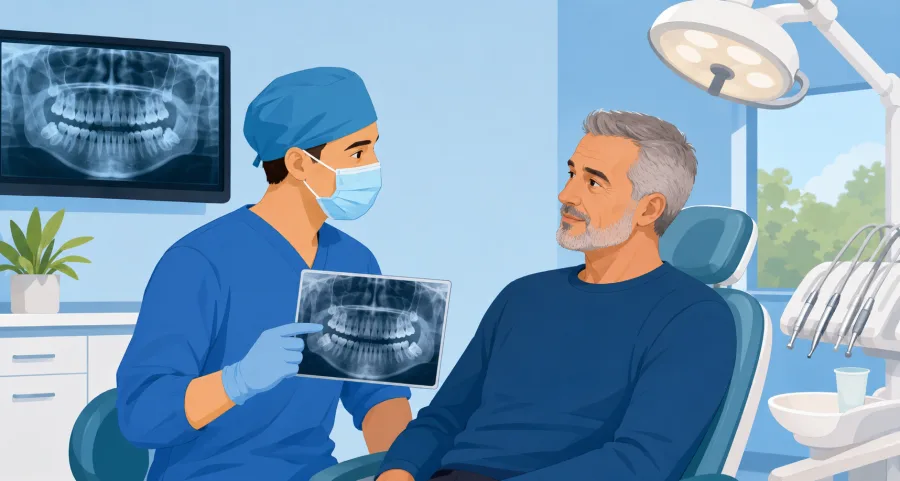
Third molar extraction is widely viewed as a rite of passage for teenagers and college students. Because of this common cultural perception, adults in their thirties, forties, fifties, or beyond are often stunned when a routine dental checkup reveals an impacted wisdom tooth that requires surgical intervention. The immediate question patients ask is natural: am I simply too old for wisdom tooth surgery?
The definitive clinical answer is no. You are never automatically too old for wisdom tooth removal. While the surgical dynamics, anatomical challenges, and healing physiology evolve significantly as the body ages, modern maxillofacial surgery protocols ensure that mature adults can undergo necessary treatment safely and comfortably. At Oral and Facial Surgery of Miami in Coral Gables, Dr. Johanny Caceres provides advanced 3D diagnostics and tailored surgical solutions for adult and senior patients.
1. The Biology of the Aging Jaw: Root Morphology, Bone Density, and Ankylosis
Oral and maxillofacial surgeons evaluate third molars through a fundamentally different lens in adults compared to adolescents. In a sixteen-year-old patient, wisdom tooth roots are only one-half to two-thirds formed, ending in blunt, open apices safely separated from vital neurological structures. In addition, adolescent alveolar bone is pliable, highly vascular, and resilient, allowing smooth tooth delivery with minimal surgical resistance.
In mature adults, three major biological changes complicate surgical extraction:
- Hyperdense Cortical Bone: With each passing decade, the jawbone undergoes physiological calcification, becoming significantly denser and less elastic. This rigidity means the bone no longer flexes during extraction, requiring delicate surgical sectioning.
- Complex Root Morphology and Dilaceration: Mature roots are fully calcified, frequently divergent, and often hooked (dilacerated) into surrounding bone or wrapped intimately around the inferior alveolar nerve canal.
- Periodontal Ligament Thinning and Ankylosis: The microscopic shock-absorbing ligament that suspends the tooth in bone gradually narrows over time. In some older adults, the tooth root directly fuses to the jawbone (ankylosis), eliminating any natural separation plane.
2. Clinical Indications in Mature Adults: When Surgery Is Truly Mandatory
Unlike teenagers, who often undergo prophylactic extraction to prevent future impaction, oral surgeons rarely operate on older adults without clear pathological indications. If an adult third molar is completely embedded within healthy bone, shows no radiolucency, and causes zero symptoms, conservative radiographic monitoring is frequently the wisest approach.
However, when adult wisdom teeth cause problems, delaying treatment poses severe risks to your overall dental health:
- Distal Cervical Caries: Partially erupted wisdom teeth trap food and biofilm against the fragile neck of the adjacent second molar. This creates deep cavities below the gumline that can destroy both teeth if left unaddressed.
- Recurrent Pericoronitis: Painful bacterial infections under the gum flap (operculum) can spread into facial fascial spaces, causing severe trismus (lockjaw) and systemic illness.
- Dentigerous Cysts and Resorption: The developmental sac surrounding an impacted crown can fill with fluid, forming a cyst that quietly expands, hollows out the jawbone, and resorbs neighboring tooth roots.
- Periodontal Pocketing: Chronic bacteria behind the second molar create deep bone defects that jeopardize the long-term survival of your primary chewing teeth.
3. Wisdom Teeth Removal Risk and Strategy Matrix by Age Group
Understanding how surgical considerations, recovery periods, and neurological risks shift across different decades helps mature patients make informed, confident choices:
| Patient Age Group | Bone & Root Status | Nerve Proximity Risk | Primary Surgical Strategy | Expected Healing Window |
|---|---|---|---|---|
| Adolescents (Ages 15 to 24) | Incomplete roots, pliable bone | Extremely low (under 1%) | Routine prophylactic extraction under IV sedation | 3 to 5 days |
| Young Adults (Ages 25 to 39) | Complete roots, normal bone density | Low (1% to 2%) | Targeted surgical extraction for symptomatic or diseased teeth | 5 to 7 days |
| Mature Adults (Ages 40 to 59) | Dense cortical bone, dilacerated roots | Moderate (2% to 4%) | Precision sectioning or coronectomy to protect the nerve | 7 to 10 days |
| Seniors (Ages 60+) | Highly sclerotic bone, risk of ankylosis | Elevated (evaluated by 3D CBCT) | Conservative intervention; medical clearance and coronectomy | 10 to 14 days |
4. Coronectomy and Advanced Sedation Protocols with Dr. Johanny Caceres
When high-resolution 3D imaging demonstrates that an adult wisdom tooth root directly contacts or indents the inferior alveolar nerve canal, complete extraction carries an increased risk of temporary or permanent lower lip and chin numbness (paresthesia). In these high-risk scenarios, Dr. Johanny Caceres frequently performs a coronectomy (partial odontectomy).
During a coronectomy, the oral surgeon carefully cuts away and removes the entire crown of the tooth (the portion containing enamel and active decay/infection risk) while leaving the vital, non-mobile root tips undisturbed in the bone. Over time, healthy jawbone grows over the retained root segments, completely resolving the patient's symptoms while reducing nerve injury risk to near zero.
Mature patients often worry about surgical discomfort and anesthesia safety. At our practice, adult sedation protocols are customized to your health profile, factoring in cardiovascular health, blood pressure, and existing medications. Whether you require a minimally invasive coronectomy or targeted extraction, our surgical suite provides continuous vital sign monitoring and profound comfort throughout your procedure.
Do not allow fears about your age to prevent you from getting the relief you need. Contact Oral and Facial Surgery of Miami at (305) 552-1193 or book your consultation online to receive expert, compassionate care tailored to your adult smile.