
Do Wisdom Teeth Cause Crooked Teeth?
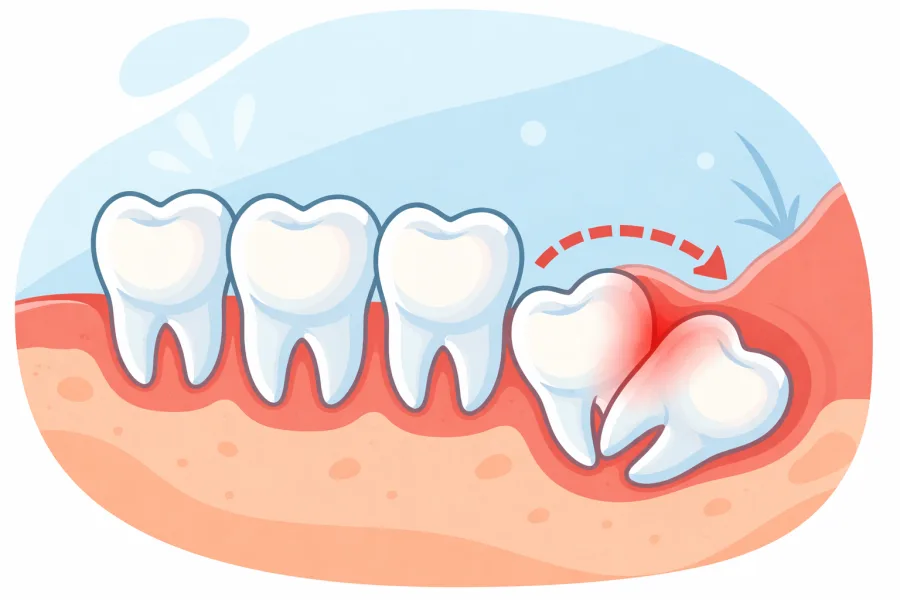
One of the most enduring beliefs in dentistry is that emerging wisdom teeth act like battering rams, pushing all other teeth forward and turning a once-straight smile into a crowded mess. Teenagers who just finished years of braces, as well as adults in their twenties noticing subtle overlapping in their lower front incisors, routinely blame their third molars. However, extensive orthodontic research over the past several decades tells a surprisingly different story.
At Oral and Facial Surgery of Miami, board-certified oral surgeon Dr. Johanny Caceres frequently evaluates patients concerned about dental alignment and third molar eruption. While wisdom teeth are notorious for causing painful impactions, pericoronitis, cysts, and second-molar decay, their role in anterior teeth crowding is widely misunderstood. Knowing the biological realities of tooth movement empowers you to make informed decisions about surgical extractions and orthodontic retention.
The Scientific Consensus: Can Wisdom Teeth Push Other Teeth Out of Alignment?
The short answer from clinical science is no. Multiple long-term university studies, including landmark research tracked by the American Association of Orthodontists, have demonstrated that wisdom teeth do not exert sufficient physical force to displace ten forward teeth along the dental arch. In classic clinical trials, researchers compared dental arches of patients with fully erupted wisdom teeth, impacted wisdom teeth, and individuals congenitally missing their third molars altogether. Surprisingly, all groups experienced roughly the exact same rate of late lower anterior crowding.
For a third molar to single-handedly push the second molar, first molar, two premolars, canine, and incisors forward, it would have to overcome immense periodontal resistance, thick cortical bone, and interproximal contact friction. Biophysical measurements show that eruptive pressure dissipates within the immediate follicular zone rather than transmitting down the arch like dominoes. Consequently, extracting wisdom teeth solely to prevent your front teeth from shifting will not guarantee permanent alignment.
| Alignment Factor | Wisdom Teeth Role | Physiological Reality |
|---|---|---|
| Anterior Crowding | Historically blamed as primary pusher | Caused by continuous mesial drift and late mandibular remodeling |
| Post-Braces Relapse | Assumed to undo orthodontic straightening | Direct consequence of discontinuing prescribed retainer wear |
| Second Molar Damage | Genuine, documented clinical threat | Angular impactions drive root resorption, deep pockets, and decay |
| Arch Width Narrowing | Minimal to no correlation | Natural adult craniofacial maturation narrows intercanine distance |
What Actually Causes Late Dental Crowding and Orthodontic Relapse?
If third molars are not forcing your front teeth together, why do so many people in their late teens, twenties, and thirties develop crooked front teeth? The transformation results from a combination of natural developmental shifts, facial bone remodeling, and biomechanical forces:
- Physiological Mesial Drift: Human teeth have a natural, lifelong biological tendency to migrate slowly forward toward the midline of the face. Every time you chew, microscopic wear occurs between contact points, and periodontal fibers gently urge teeth forward to keep gaps closed. Over decades, this forward vector compresses the dental arch.
- Late Mandibular Growth: The lower jawbone continues subtle growth and remodeling well into the early twenties, often after the upper jaw has stabilized. As the mandible tightens against the upper dental arch, lower incisors are pushed backward against lingering lingual vectors, creating overlapping.
- Intercanine Width Narrowing: Scientific measurements confirm that the transverse distance between your lower canine teeth naturally decreases as you age. Even individuals born without any wisdom teeth experience this gradual narrowing.
- Retainer Discontinuation: The leading cause of post-orthodontic crowding is inconsistent retainer use. Periodontal ligament fibers have elastic memory and pull teeth back toward their pre-treatment coordinates unless stabilized consistently by retainers.
When Wisdom Tooth Extraction Is Still Orthodontically Warranted
While third molars do not shove the entire arch forward, leaving problematic wisdom teeth in place can still derail your dental health and complicate orthodontic outcomes. In our Coral Gables surgical center, Dr. Caceres recommends third molar extraction under several specific clinical conditions:
- Impaction Against Second Molars: When a wisdom tooth grows horizontally or mesially angled, it presses directly against the root trunk or crown of the adjacent second molar. This creates an un-cleanable trap that causes destructive cavities, irreversible root resorption, and severe periodontal bone craters.
- Orthodontic Distalization Needs: When an orthodontist plans to shift your entire dental arch backward to correct an overbite, open bite, or severe crowding without pulling functional premolars, the presence of third molars physically blocks tooth movement. Extracting them creates essential bony space for orthodontic mechanics.
- Pericoronitis and Chronic Infections: Partially erupted wisdom teeth leave gum flaps where bacteria thrive, triggering recurrent swelling, jaw stiffness, and bad breath. Learning how to tell if your wisdom tooth is infected helps prevent dangerous facial cellulitis.
- Cyst and Tumor Formation: Un-erupted third molars remain encased within a fluid-filled follicle that can expand into dentigerous cysts, hollowing out surrounding jawbone and loosening stable anchor teeth.
Clinical Decision Making and Protecting Your Alignment at OFS Miami
Preserving straight teeth and protecting long-term jaw health requires a coordinated strategy between your general dentist, your orthodontist, and your oral surgeon. If you notice your smile shifting, the first line of defense is having your orthodontic retainers evaluated, adjusted, or replaced before teeth migrate further.
At the same time, specialized 3D Cone Beam CT (CBCT) imaging allows Dr. Caceres to visualize third molar root anatomy, proximity to the inferior alveolar nerve, and relationship to neighboring second molars with sub-millimeter precision. If surgical extraction is indicated, our Coral Gables surgical suite provides comforting outpatient IV sedation tailored to your comfort.
Do not wait until impacted third molars cause irreversible damage to neighboring teeth or require urgent surgical interventions. Contact Oral and Facial Surgery of Miami today at (305) 552-1193 or book your consultation online to receive an individualized surgical evaluation in Coral Gables.