
When Oral Infections Become Serious Health Risks
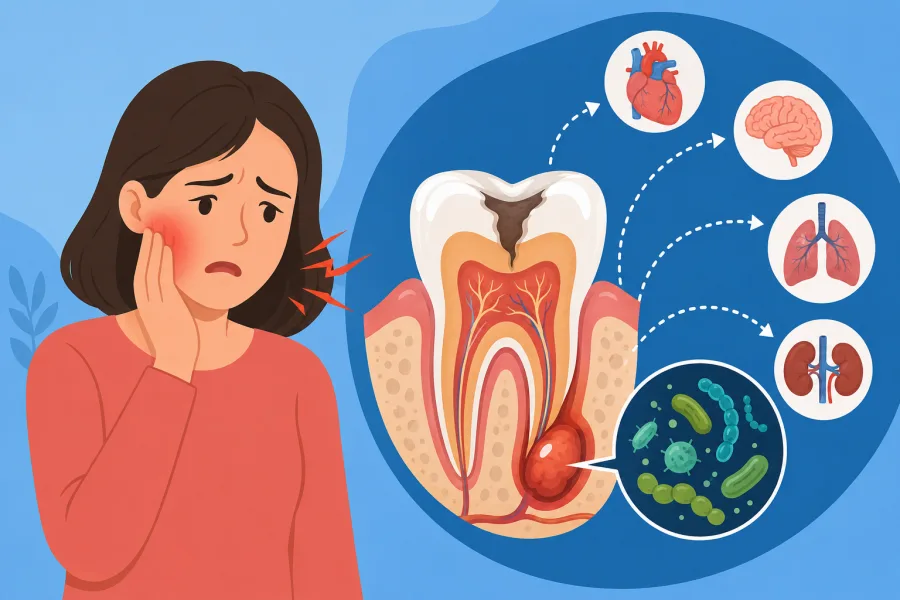
A minor toothache or a tender spot on the gum is easy to dismiss when life is busy. Many people assume that if the pain eventually dulls, the problem has resolved. In oral pathology, however, a sudden decrease in pain often signals that the tooth nerve has completely died, allowing necrotic bacteria to multiply silently within the jawbone. Oral infections are not self-limiting surface scratches. Left untreated, they can break through bone and connective tissue barriers, transitioning from localized dental decay into life-threatening systemic emergencies.
Because the head and neck contain dense vascular networks and interconnected fascial compartments without anatomical barriers, oral bacteria can travel surprisingly fast. Understanding how a routine tooth infection becomes dangerous, what systemic organs are placed at risk, and why surgical source control is necessary can prevent hospitalization and save your life.
1. The Pathophysiology of Oral Sepsis: How Bacteria Breach Bone and Blood Vessels
The human oral cavity hosts hundreds of bacterial species living in equilibrium. When severe dental decay, root fractures, or advanced periodontitis breach the physical enamel and dentin shields, oral pathogens gain direct access to the sterile vascular pulp canal. Once the nerve tissue succumbs, aggressive anaerobic bacteria (such as Fusobacterium nucleatum, Porphyromonas gingivalis, and Peptostreptococcus) take over.
As these anaerobes metabolize necrotic cellular debris, they release destructive enzymes, including collagenases and hyaluronidases. These enzymes actively dissolve surrounding tissues:
- Cortical Bone Perforation: The accumulating hydraulic pressure inside the jawbone dissolves the cortical plates. When infection breaks through the bone, it forms an acute subperiosteal abscess before spreading into soft tissues.
- Retrograde Venous Spread: The veins of the face and pterygoid venous plexus lack valves. If bacteria enter these venous channels, blood can flow backward toward the intracranial vault, creating the catastrophic threat of cavernous sinus thrombosis (septic blood clots at the base of the brain).
- Systemic Sepsis: When overwhelming colonies of bacteria enter the general bloodstream, the immune system triggers a massive inflammatory cascade known as sepsis. Blood pressure plunges, vital organ perfusion collapses, and septic shock follows rapidly.
2. Fascial Planes and Airway Compromise: Cellulitis vs. Abscess
One of the most dangerous developments in oral surgery is the migration of odontogenic infection into deep neck spaces. Unlike superficial infections that form visible pimples on the gums, deep fascial infections travel along muscle sheaths:
| Anatomic Fascial Space | Typical Odontogenic Origin | Clinical Complication & Danger |
|---|---|---|
| Submandibular & Sublingual Spaces | Lower second and third molars (roots extending below mylohyoid line). | Elevates floor of mouth and tongue, precipitating acute Ludwig angina and airway suffocation. |
| Lateral Pharyngeal Space | Lower wisdom tooth pericoronitis tracking posteromedially. | Severe trismus (inability to open mouth), deviation of uvula, compression of carotid sheath. |
| Retropharyngeal & "Danger Space" | Unchecked extension from lateral pharyngeal or peritonsillar space. | Direct continuous highway into posterior mediastinum, triggering acute necrotizing mediastinitis (high mortality rate). |
| Maxillary Sinus & Canine Fossa | Upper molars and canines whose roots approximate the antral floor. | Pansinusitis, periorbital cellulitis, orbital abscess, and risk of permanent vision loss. |
Distinguishing between firm, diffuse cellulitis (an active, spreading bacterial tissue invasion) and a localized, fluctuant abscess (where dead leukocytes have created a pool of liquid pus) is vital. Both require urgent surgical assessment, but cellulitis can expand by the hour and requires immediate intervention.
3. Remote Systemic Impact: Heart, Joints, and Metabolic Instability
Oral infections do not confine their damage to the facial bones. Bacteria circulating through the bloodstream lodge in distant vulnerable tissues:
- Infective Endocarditis: Oral streptococci can adhere to damaged heart valves, artificial valves, or congenital cardiac defects. Bacterial vegetations form on the heart valves, eroding delicate valve leaflets and causing acute heart failure.
- Total Joint Prosthesis Seeding: Patients with prosthetic hip or knee implants are at risk of hematogenous seeding. Oral bacteria can colonize the artificial joint surfaces, forming protective biofilms that frequently require complete orthopedic revision surgery.
- Diabetic Hyperglycemia and Ketoacidosis: Chronic systemic inflammation from an active dental abscess releases cortisol and inflammatory cytokines like TNF-alpha, inducing extreme insulin resistance. Even well-managed diabetics can experience uncontrollable blood sugar spikes and ketoacidosis until the dental source is surgically removed.
- Mandibular Osteomyelitis: When bacteria invade the dense medullary bone marrow of the lower jaw, blood supply is compromised. Bone tissue becomes ischemic and dies, forming a necrotic bone fragment called a sequestrum that requires extensive surgical saucerization and reconstruction.
4. Surgical Source Control with Dr. Johanny Caceres in Miami
One of the most persistent myths in healthcare is that a ten-day course of amoxicillin or clindamycin will cure a tooth infection. Antibiotics cannot sterilize the necrotic, bloodless interior of a dead tooth. While pills may temporarily blunt surrounding tissue inflammation, the underlying bacterial fortress remains entirely active. The moment antibiotics stop, the infection returns with higher antibiotic resistance.
Definitive healing requires surgical source control. Board-certified oral and maxillofacial surgeon Dr. Johanny Caceres specializes in managing complex odontogenic and facial infections at Oral and Facial Surgery of Miami:
- Decompression and Drainage: We perform precise intraoral or extraoral incision and drainage (I&D) to relieve tissue pressure, purge purulent collections, and flush the affected anatomic space with sterile saline.
- Eradication of the Offending Reservoir: Whether through surgical extraction of broken or impacted wisdom teeth, or surgical periapical debridement, removing the bacterial focus eliminates the root cause permanently.
- Sedation for Patient Comfort: Treating acute facial infections can be painful and anxiety-provoking. We offer safe, monitor-guided IV sedation so you can undergo emergency treatment in total physical comfort.
- Bacterial Culture & Sensitivity Testing: When appropriate, we isolate fluid samples to verify that prescribed antibiotics match the exact susceptibility profile of your infection.
If you are experiencing jaw pain, facial swelling, foul-tasting discharge, or fever, do not wait for the infection to spread further. Contact our surgical team right away at (305) 552-1193 or schedule an urgent evaluation online.