
After Tooth Extraction: How to Keep Other Teeth Safe
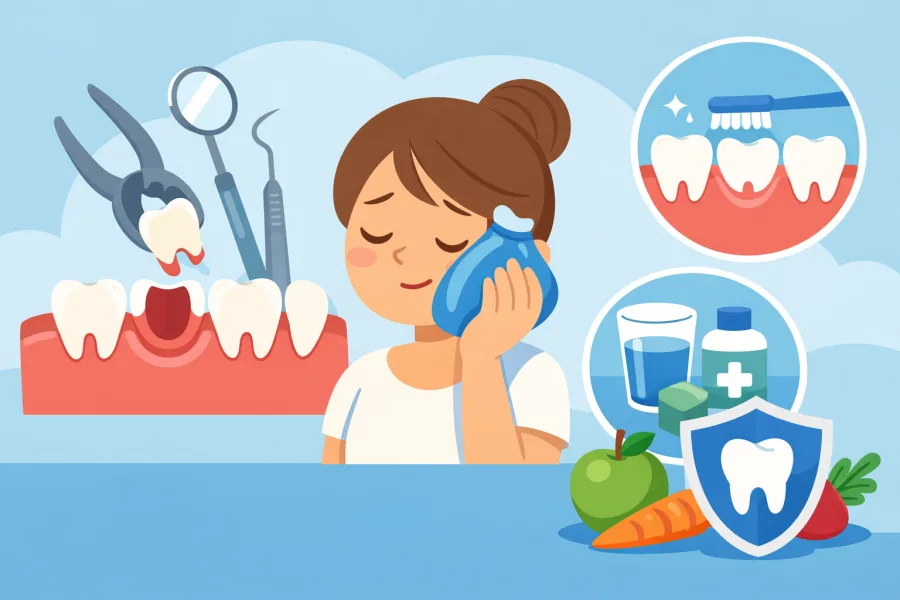
Undergoing a tooth extraction removes pain, infection, or severe crowding, but the removal of a permanent tooth significantly alters the mechanics of your entire dental arch. Teeth do not function as isolated pillars; they rely on continuous mutual contact with adjacent and opposing teeth to maintain alignment, distribute chewing forces, and stimulate supporting jawbone. When a tooth is removed, the remaining teeth become vulnerable to progressive shifts, bone loss, and localized trauma.
At Oral and Facial Surgery of Miami, board-certified oral and maxillofacial surgeon Dr. Johanny Caceres prioritizes comprehensive arch stability during and after surgical extractions. Understanding how adjacent and opposing teeth respond to a tooth extraction allows South Florida patients to take proactive measures that preserve their overall bite balance and aesthetic harmony.
The Biomechanics of Mesial Drifting and Super-Eruption
When a permanent tooth is extracted and left unreplaced, the surrounding teeth naturally begin migrating into the vacant space. This physiological phenomenon, known as mesial drifting, occurs because chewing forces exert a forward vector along the dental arch. The tooth immediately posterior to the extraction site tilts forward into the gap, destabilizing its periodontal ligament and altering its root axis.
Simultaneously, the opposing tooth in the opposite arch loses its chewing contact partner. Without occlusal resistance, the opposing tooth gradually erupts out of its alveolar socket, a process called super-eruption or supraversion. As the opposing tooth over-erupts, its sensitive root surfaces become exposed to oral acids, and its altered height interferes with normal jaw movement, leading to severe bite discrepancies, uneven enamel wear, and temporomandibular joint strain.
Preventing Crestal Bone Resorption with Socket Preservation
Beyond tooth shifting, tooth removal triggers rapid physiological resorption of the surrounding alveolar bone. In the first six months following an extraction, the jawbone width can decrease by up to forty to sixty percent because the bone no longer receives functional stimulation from the tooth root. This localized bone atrophy does not stop at the empty socket; it erodes the supporting crestal bone of adjacent neighboring teeth.
To safeguard neighboring roots, oral surgeons perform socket preservation bone grafting at the exact moment of extraction. By packing the empty extraction socket with sterile bone grafting particles and covering it with a collagen membrane, the surgeon maintains the original horizontal and vertical bone ridge architecture. This prevents bone loss around adjacent teeth and preserves an ideal foundation for a future permanent dental implant.
| Post-Extraction Risk | Physiological Consequence | Impact on Other Teeth | Clinical Solution |
|---|---|---|---|
| Mesial Drifting | Posterior teeth tilt forward into empty extraction space | Creates food traps, hard-to-clean angles, and deep pockets | Timely dental implant or orthodontic space maintainer |
| Super-Eruption | Opposing tooth erupts downward or upward into void | Exposes root dentin, causes bite interference and TMJ strain | Immediate or early tooth replacement restoration |
| Alveolar Bone Loss | Ridge resorbs 40% to 60% in width within six months | Compromises bone support around adjacent healthy roots | Socket preservation bone graft at extraction |
| Chewing Overload | Patient shifts chewing exclusively to opposite side of mouth | Causes enamel fractures, abfraction, and muscle fatigue | Bilateral chewing restoration with dental implants |
Gentle Hygiene Practices During Early Socket Recovery
During the immediate one- to two-week healing window, protecting adjacent teeth requires tailored oral hygiene adjustments. Neglecting neighboring teeth out of fear of disturbing the surgical site allows plaque biofilm and food debris to settle along vulnerable cervical margins, rapidly causing gingival inflammation or secondary root decay.
Patients must continue brushing and flossing all remaining teeth, taking special care as they approach the extraction boundary. When cleaning teeth adjacent to the socket, use a soft-bristled manual brush with gentle, circular sweeping motions away from the gumline, avoiding direct contact with the healing blood clot or surgical sutures. Warm saltwater rinses after meals flush away trapped food particles from adjacent surfaces without mechanical irritation.
Permanent Restoration Options in Coral Gables
The definitive way to keep remaining teeth safe over your lifetime is replacing the missing tooth with a standalone dental implant. Unlike traditional dental bridges, which require permanently shaving down healthy adjacent teeth to serve as anchor crowns, a dental implant integrates directly into the jawbone without touching neighboring dentition. It provides natural chewing stimulation, prevents super-eruption, and halts bone resorption permanently.
At Oral and Facial Surgery of Miami, Dr. Johanny Caceres uses 3D guided implant technology to plan precision restorations that protect and support your natural teeth for decades to come. If you have had a tooth removed or are planning an extraction, contact our surgical center at (305) 552-1193 or book your consultation online.