
Warning Signs of a Serious Wisdom Tooth Infection You Shouldn’t Ignore
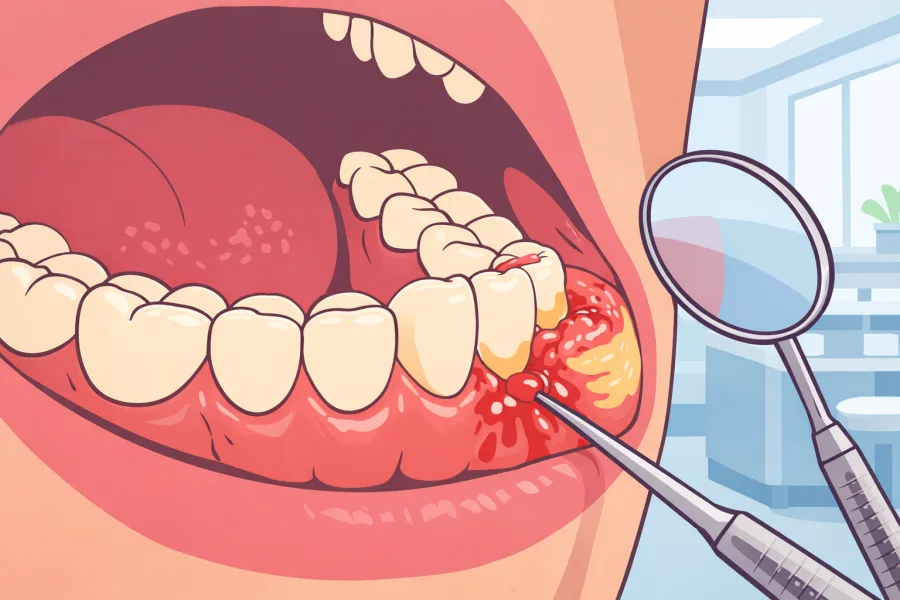
It is easy to rationalize away a mild ache in the back of your mouth as ordinary teething discomfort or a temporary irritation from chewing something crunchy. However, third molars inhabit a precarious anatomical crossroads directly adjacent to the major vascular corridors, deep fascial planes, and airway structures of the head and neck. When an infected wisdom tooth goes untreated, what began as a localized bacterial invasion can swiftly transform into an acute surgical emergency.
Recognizing the cardinal warning signs that an infection has breached local barriers allows you to seek timely maxillofacial care before dangerous complications jeopardize your breathing, jawbone health, or systemic wellness.
From Localized Soreness to Deep Pathology: How Infections Escalate
The journey from mild discomfort to severe infection usually begins with partial impaction. When a third molar cannot fully emerge, the surrounding gingiva forms a loose flap over the biting surface. This biological trap harbors pathogenic anaerobes that digest trapped food debris, saliva, and desquamated cells in an oxygen-deprived pocket.
Initially, the body responds with localized inflammation: modest gingival swelling, redness, and tenderness to pressure. If the bacteria remain undisturbed, they penetrate deeper into the periodontal ligament, erode adjacent alveolar bone, and form a closed subperiosteal abscess.
At this critical juncture, the character of the pain changes dramatically. The ache shifts from an intermittent, tolerable annoyance to an intense, persistent, throbbing pain that radiates up into the temple, behind the eye, down into the neck, and deep into the ear canal. Over-the-counter pain medications that previously brought relief suddenly fail to dull the pain.
The Cardinal Warning Signs of an Advancing Head and Neck Infection
When a wisdom tooth infection spreads into surrounding deep tissues, specific clinical red flags appear. If you experience any of the following symptoms, the condition requires immediate evaluation by an oral and maxillofacial surgeon:
- Progressive Trismus (Jaw Inability to Open): When infection tracks into the masticator spaces (involving the masseter, medial pterygoid, or temporalis muscles), severe muscle spasms occur. Being unable to open your mouth wider than two fingers is an objective sign that infection is spreading along deep muscular planes.
- Firm, Asymmetric Facial Swelling: Unlike the soft puffiness of a mild gum problem, an advancing infection creates firm, warm, and tender swelling that extends past your jawline, into your cheek, or beneath the chin.
- Purulent Drainage and Foul Taste: The spontaneous or pressure-induced leakage of white or yellowish pus from the gum line indicates an active abscess cavity. This discharge produces an overwhelming, foul taste and bad breath that brushing cannot freshen.
- Systemic Fever, Chills, and Malaise: A persistent body temperature above 100.4 degrees Fahrenheit, night sweats, and severe bodily fatigue signify that bacterial toxins are entering your bloodstream and provoking a systemic immune defense.
- Dysphagia (Painful or Difficult Swallowing): Feeling as though a foreign mass is lodged in your throat, experiencing sharp pain when swallowing saliva, or noticing that your tongue feels elevated toward the roof of your mouth indicates involvement of the sublingual and pharyngeal tissue spaces.
Dangerous Maxillofacial Anatomy: Fascial Planes and Airway Compromise
The lower jaw is bounded by thin cortical bone and complex fascial tissue spaces. When pus accumulates around the roots of a lower third molar, it seeks the path of least resistance. Because the inner (lingual) bone plate near wisdom teeth is naturally thin, infections can easily rupture into the submandibular, sublingual, and lateral pharyngeal spaces.
When an infection spreads bilaterally into these contiguous spaces beneath the tongue and jaw, it is clinically known as Ludwig angina. This severe cellulitis causes rapid, brawny swelling of the floor of the mouth, forcing the tongue upward and backward until it obstructs the airway. Ludwig angina is a life-threatening medical emergency requiring immediate hospitalization, airway protection, and surgical drainage.
Similarly, bacteria from upper wisdom teeth can travel upward into the maxillary sinus or, in rare cases, communicate with deep venous networks leading toward the cavernous sinus. These anatomical realities illustrate why dental infections must never be dismissed as simple toothaches.
Definitive Surgical Management with Dr. Johanny Caceres in Coral Gables
Treating a serious wisdom tooth infection requires decisive surgical skill. While oral antibiotics may be used to support therapy, they cannot penetrate an enclosed pocket of purulence without mechanical intervention. True resolution requires surgical drainage, debridement of infected granulation tissue, and definitive removal of the impacted third molar.
At our practice, board-certified oral and maxillofacial surgeon Dr. Johanny Caceres brings extensive hospital-level surgical residency training to emergency facial and dentoalveolar infections. Using high-resolution in-office 3D CBCT scans, Dr. Caceres precisely maps the infection pocket, determines the exact path of the inferior alveolar nerve, and safely removes the problematic tooth under soothing IV sedation.
If you or a loved one is experiencing severe wisdom tooth pain, facial swelling, or fever, do not risk serious complications. Contact our surgical team directly at (305) 552-1193 or request an urgent evaluation online today.