
When Wisdom Tooth Swelling Peaks After Extraction and Eases
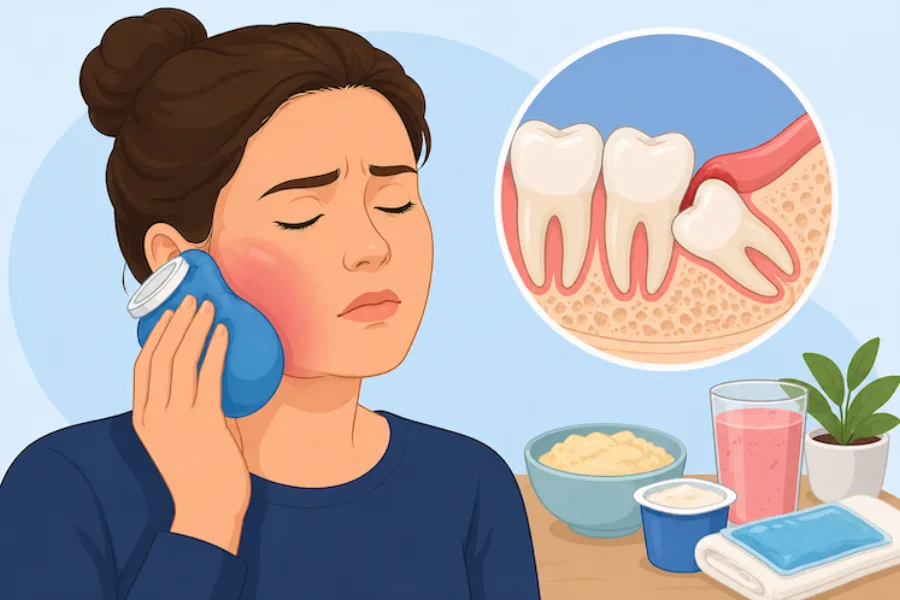
Waking up on the second or third morning after wisdom tooth surgery to find your cheeks significantly puffier than they were on the day of your procedure can be alarming. Many patients assume that as each day passes, their face should look progressively less swollen. In oral and maxillofacial surgery, however, tissue inflammation follows a very specific biological curve: post-extraction facial swelling does not peak immediately, it surges to its maximum fullness between 48 and 72 hours post-surgery before beginning to recede.
At Oral & Facial Surgery of Miami, board-certified oral surgeon Dr. Johanny Caceres prepares patients for every stage of recovery. Understanding the precise physiology of post-operative edema, why asymmetrical swelling happens, and how to execute the critical transition from cold packs to moist heat allows you to recover comfortably and confidently.
1. The Biological Peak: Why Swelling Surges on Days Two and Three
When impacted third molars are removed, the surrounding gum tissues, periosteum, and alveolar bone sustain controlled surgical manipulation. The body immediately responds by initiating the acute inflammatory cascade. Specialized mast cells and platelets release biochemical mediators, including histamine, bradykinin, and prostaglandins.
These signaling molecules dilate regional arterioles and loosen the endothelial junctions of microscopic capillaries, allowing blood plasma, white blood cells, and reparative antibodies to seep into surrounding connective tissues. Because this fluid accumulation (edema) takes 48 to 72 hours to reach equilibrium within the deep fascial spaces of the cheeks (the buccal and masseteric spaces), your swelling will naturally look and feel most pronounced on day three. Once inflammatory signaling peaks, your lymphatic vessels begin filtering and reabsorbing the accumulated interstitial fluid, leading to visible daily improvement from day four onward.
| Timeline Stage | Tissue Presentation & Jaw Sensation | Recommended Clinical Action |
|---|---|---|
| Day 1 (0-24 Hours) | Mild cheek fullness; numbness gradually wears off; minor capillary oozing controlled with gauze. | Apply ice packs on a strict 20 min on/off rotation; sleep with head propped above heart on extra pillows. |
| Days 2 to 3 (48-72 Hours) | Peak facial swelling; cheeks feel firm and taut; noticeable jaw stiffness (trismus) limiting opening. | Continue cold packs through hour 48; stick to scheduled anti-inflammatory medications; eat pureed soft foods. |
| Days 4 to 5 | Swelling drops noticeably; jaw tightness begins softening; faint yellow or greenish bruising may surface. | Switch from ice to moist warm compresses; perform gentle mouth-opening stretches; warm saltwater rinses. |
| Day 7 and Beyond | Residual swelling drops to near zero; normal jaw range of motion returns; soft tissue continues deep healing. | Advance to soft solid foods; maintain meticulous gentle hygiene; contact office if firm lump persists. |
2. Asymmetrical Swelling and Trismus: Why One Side Looks Bigger
It is exceptionally common for patients to have one cheek swell twice as much as the other. This asymmetry rarely indicates a surgical problem; rather, it reflects differences in anatomical impaction between your left and right third molars.
Impaction Depth and Bone Guttering: A fully erupted upper wisdom tooth with straight roots can often be elevated gently in under two minutes, causing negligible tissue trauma. Conversely, a deeply impacted lower tooth lying horizontally beneath dense cortical bone requires careful bone removal and tooth sectioning. The side that required greater surgical intervention naturally experiences more robust inflammatory swelling.
Masticatory Muscle Spasm (Trismus): Inflammatory edema from lower third molar sockets frequently spills directly into the masseter and internal pterygoid muscles. When these powerful chewing muscles become inflamed, they enter a protective spasm known as trismus, restricting how wide you can open your mouth. Feeling unable to insert more than two fingers between your front incisors during days two and three is completely normal and resolves steadily as swelling recedes.
3. The Cold-to-Heat Strategic Pivot: Timing Your Thermal Care
One of the most frequent post-operative mistakes patients make is applying heat too early or continuing ice therapy indefinitely. To minimize recovery time, you must align your thermal compresses with the body's changing vascular phases.
The First 48 Hours: Aggressive Cold Therapy. During the initial two days, your sole vascular objective is vasoconstriction. Applying ice packs or chilled gel compresses directly outside your cheeks for 20 minutes on, followed by 20 minutes off, narrows microscopic vessels and halts the rush of inflammatory fluid into the tissues. Applying warm compresses during this early window is counterproductive, as warmth floods surgical sites with blood and drastically exacerbates cheek ballooning.
Day Three and Beyond: The Warmth Transition. Once you cross the 48-to-72 hour threshold, the biological window for preventing swelling closes. Your goal now shifts to stimulating local perfusion and relaxing tight muscles. Switch to moist warm compresses, such as a warm damp washcloth or heated gel pack wrapped in a towel, applied for 15 to 20 minutes three to four times daily. Gentle warmth dilates lymphatic channels, clears accumulated bruising pigments, and relieves jaw stiffness.
4. Warning Signs: Distinguishing Normal Edema from Clinical Infection
While prominent cheek puffiness and yellowish jaw bruising are standard hallmarks of uneventful recovery, you must know when post-operative swelling crosses the line into a secondary surgical issue. Normal swelling peaks at 72 hours and begins visibly softening by day four.
Contact Dr. Caceres at Oral & Facial Surgery of Miami immediately if you observe any of the following clinical warning signs:
- Swelling that rebounds or rapidly expands after day four instead of shrinking.
- A firm, rock-hard (indurated) swelling extending downward beneath the lower border of your jaw or into your neck tissues.
- Difficulty swallowing your own saliva, or any sensation of breathing obstruction.
- A persistent fever over 101 degrees Fahrenheit, accompanied by foul-smelling purulent drainage (pus) from around your rear molars.
- Severe throbbing pain that spikes on day four or five and radiates to your ear without responding to prescription medications (a sign of dry socket).
At Oral & Facial Surgery of Miami, board-certified oral surgeon Dr. Johanny Caceres combines low-dose 3D CBCT imaging with minimally invasive surgical techniques to minimize post-operative swelling and ensure your recovery is smooth and comfortable. If you are preparing for wisdom tooth removal or have concerns about your healing in Coral Gables, call our office at (305) 552-1193 or schedule your consultation online today.