
How Rare Are Serious Wisdom Tooth Complications?
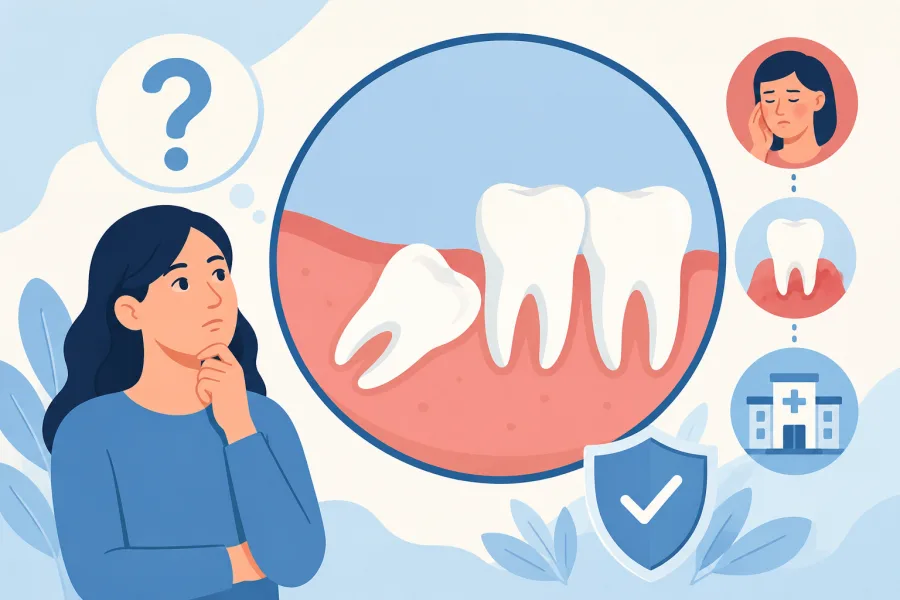
If you have spent any time searching the internet before having your third molars evaluated, you have likely encountered horror stories about permanent numbness, intractable infections, or agonizing dry sockets. The reality in a specialized surgical setting is dramatically different. Wisdom tooth removal is one of the most routinely performed, clinically predictable procedures in modern oral and maxillofacial surgery. While no surgical intervention carries zero risk, genuinely severe complications are statistically rare.
Most post-operative sensations, including localized cheek swelling, jaw stiffness, and manageable soreness, are physiological healing responses rather than surgical failures. At Oral & Facial Surgery of Miami, Dr. Johanny Caceres uses advanced three-dimensional imaging and microsurgical principles to identify anatomical risks before touching a scalpel, transforming what feels like an intimidating ordeal into a smooth, uneventful recovery.
1. Surgical Reality: Expected Healing Sensations vs. Genuine Complications
Much of the anxiety surrounding wisdom teeth stems from confusing expected post-operative discomfort with true clinical complications. When a tooth is gently elevated from dense jawbone, surrounding tissues naturally respond with inflammatory mediators. This inflammatory cascade peaks around 48 to 72 hours post-surgery before steadily regressing.
Mild oozing that tinges your saliva pink, moderate facial swelling, and tightness when opening your mouth (trismus) are normal markers of the body repairing surgical sites. A true complication, by contrast, involves secondary breakdown of the wound, unexpected neurosensory disruption, or bacterial proliferation requiring surgical intervention.
| Clinical Symptom | Expected Healing Response | True Surgical Complication |
|---|---|---|
| Post-Op Discomfort | Ache that responds reliably to prescribed or OTC analgesics; peaks day 2 or 3 then declines | Throbbing, radiating pain that spikes sharply on day 4 or 5 unresponsive to medication (dry socket) |
| Facial Swelling | Firm swelling along cheeks or jaw angle, subsiding steadily after 72 hours | Rapidly expanding, red, hot swelling extending under the jaw or floor of the mouth with fever |
| Bleeding / Oozing | Pink saliva or minor red oozing during the first 12 to 24 hours stopped with gentle gauze pressure | Continuous, rapid bright-red filling of the mouth that does not stop after 45 minutes of firm pressure |
| Lip & Chin Sensation | Gradual return of normal sensation within 4 to 8 hours as local anesthesia wears off | Persistent profound numbness or tingling in the lower lip or chin lasting past the first 24 hours |
2. Deconstructing the "Big Three" Complications: Actual Odds and Realities
When patients express fear about third molar surgery, they almost always point to three distinct worries: dry socket, post-operative infection, and nerve injury. Examining the actual clinical literature provides immense peace of mind.
Alveolar Osteitis (Dry Socket): Occurring in roughly 2% to 5% of routine extractions (though slightly higher in deeply impacted lower molars), dry socket happens when the protective blood clot dislodges prematurely, exposing underlying socket walls to air and oral fluids. While acutely painful, it poses zero threat to long-term health, causes no permanent damage, and is promptly resolved in our office with a soothing medicated dressing that relieves pain within minutes.
Post-Surgical Infection: True secondary bacterial infections occur in fewer than 1% to 2% of healthy surgical patients. Because oral tissues possess an abundant vascular supply and strict sterile surgical technique is maintained throughout the procedure, the body defends extraction sites exceptionally well. When minor infections do occur, they are typically superficial and resolve rapidly with targeted oral antibiotics or warm saline rinses.
Inferior Alveolar or Lingual Nerve Irritation: The roots of lower wisdom teeth occasionally develop in close proximity to the alveolar nerve canal. Temporary sensory changes (tingling or altered sensation in the lower lip or chin) occur in approximately 1% of difficult lower impactions. Permanent nerve impairment, however, is extraordinarily rare, documented at well under 0.1% across major maxillofacial registries. Modern high-resolution cone beam computed tomography (CBCT) maps nerve proximity in 3D prior to surgery, allowing the surgeon to plan conservative sectioning or coronectomy to protect the nerve bundle entirely.
3. Key Factors That Influence Your Personal Risk Profile
Your individual probability of an uneventful recovery depends heavily on three clinical variables: patient age, depth of impaction, and personal systemic health.
Patient Age and Bone Flexibility: The ideal window for third molar removal is during the late teenage years or early twenties. At this stage of development, roots are only one-half to two-thirds formed, eliminating deep nerve contact, and surrounding jawbone remains pliable. In patients over 30 or 40, roots are fully calcified, bone density is significantly higher, and the healing turnover rate slows down, incrementally elevating recovery discomfort.
Angulation and Impaction Depth: Completely erupted teeth or soft-tissue impactions carry almost negligible surgical risk. In contrast, deep horizontal or bony impactions require precise bone removal and tooth sectioning. Addressing impacted wisdom teeth proactively before roots lock into the jaw eliminates the complex conditions that drive complications.
Habits and Medical History: Nicotine consumption is the number one preventable risk factor for dry socket and delayed healing. The suction created by smoking or vaping, coupled with nicotine-induced vasoconstriction that chokes blood flow to the clot, dramatically increases alveolar osteitis rates. Following post-op guidelines, refraining from straws, and maintaining thorough yet gentle hygiene keeps risks at their lowest possible baseline.
4. Surgical Protocols That Ensure Maximum Patient Safety
Having your third molars removed by an experienced board-certified oral and maxillofacial surgeon offers safety advantages that general dental clinics cannot match. Dr. Johanny Caceres undergoes extensive hospital-based surgical residency training covering complex anatomy, anesthesia administration, and emergency airway management.
our surgical suite uses continuous multi-lead monitoring, hospital-grade sterilization, and minimally traumatic sectioning tools that preserve surrounding bone. If high-resolution 3D imaging indicates that a root is directly intertwined with the inferior alveolar nerve, Dr. Caceres can perform a deliberate coronectomy. In this advanced procedure, the crown of the tooth causing impaction is cleanly excised while leaving the healthy, uninfected root tips safely anchored, reducing nerve complication rates to virtually zero.
If you have been holding back on treating painful or impacted wisdom teeth because of stories on the internet, know that modern oral surgery delivers predictable, safe outcomes every day. To schedule a detailed clinical examination and 3D CBCT scan at Oral and Facial Surgery of Miami, contact Oral & Facial Surgery of Miami at (305) 552-1193 or book your consultation online.