
Why Some People Never Get Wisdom Teeth
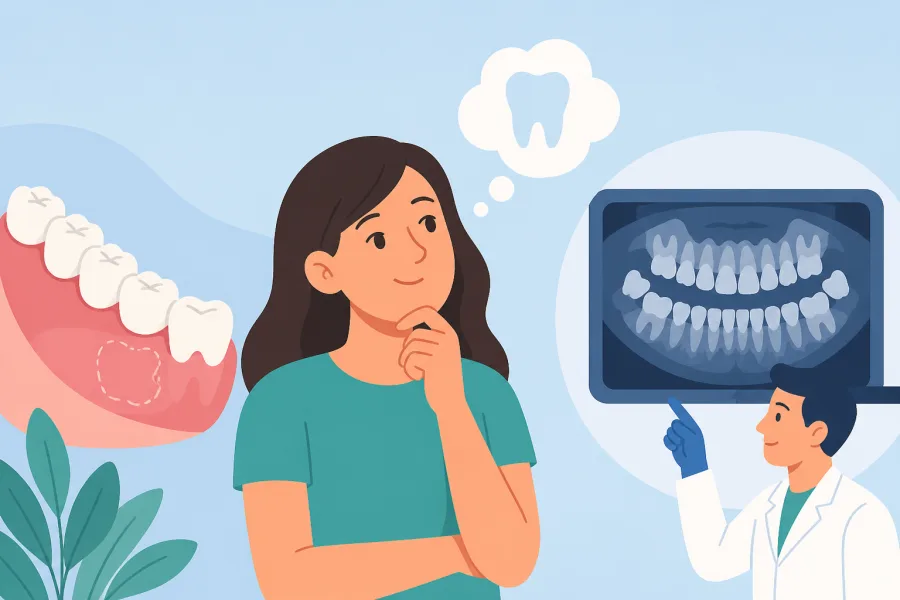
While having your wisdom teeth removed is widely viewed as an unavoidable milestone of early adulthood, a fortunate percentage of the population never undergoes the procedure. In fact, many individuals reach their thirties and beyond without ever experiencing a single symptom or developing a third molar. Discovering that you have zero wisdom teeth is not an anomaly, but rather a fascinating demonstration of ongoing human evolution and genetics.
At Oral and Facial Surgery of Miami, board-certified oral and maxillofacial surgeon Dr. Johanny Caceres frequently evaluates patients curious about their dental development. Examining the biological mechanisms behind missing third molars reveals how genetics, jaw size, and evolutionary trends shape our smiles.
Third Molar Agenesis: The Genetic and Evolutionary Shift
The congenital absence of one or more permanent teeth is medically known as agenesis. Among all 32 teeth in the human adult dentition, third molars are by far the most likely to be congenitally missing. Globally, research indicates that roughly 10 to 15 percent of people fail to develop any wisdom teeth whatsoever, while up to 35 percent are missing at least one.
This variation represents micro-evolution in real time. Hundreds of thousands of years ago, when early hominids chewed coarse, abrasive diets of raw roots and uncooked meat, developing broad jaws with 32 robust teeth was necessary for survival. But with the advent of cooking, agriculture, and modern food processing, human jaws have steadily decreased in size. Natural selection favors smaller, lighter craniofacial frameworks, making extra molars functionally redundant.
| Wisdom Tooth Status | Population Frequency | Underlying Mechanism | Clinical Recommendation |
|---|---|---|---|
| Complete Agenesis (0 teeth) | 10% to 15% of global population | Genetic suppression of dental lamina tooth buds | Zero treatment needed; ideal anatomical outcome |
| Partial Agenesis (1 to 3 teeth) | 20% to 30% of global population | Variable genetic penetrance and familial traits | Monitor for supra-eruption of unopposed molars |
| All Four Present | 55% to 65% of global population | Ancestral mammalian dental lamina activation | Routine 3D evaluation for impaction and crowding |
| Supernumerary (5+ teeth) | 1% to 2% of global population | Hyperactivity of dental lamina (distomolars) | Surgical extraction to prevent deep cyst formation |
PAX9, MSX1, and the Biology of Missing Teeth
Tooth development is governed by precise molecular signaling pathways. Specialized genes, particularly PAX9, MSX1, and AXIN2, encode proteins responsible for instructing embryonic cells to form the dental lamina: the biological foundation from which tooth buds emerge.
Mutations or variations in these genes prevent the third molar tooth germ from initiating during childhood. If the tooth bud never forms, no enamel, dentin, or root matrix will ever develop. This trait is strongly heritable; if one or both of your biological parents never developed wisdom teeth, your likelihood of congenital agenesis increases substantially.
Confirming True Agenesis vs Complete Bone Impaction
Just because you cannot see or feel wisdom teeth in the back of your mouth does not necessarily mean you were born without them. A common clinical mistake is assuming that absent visible teeth equate to true agenesis.
In numerous instances, third molars are fully formed but remain completely entombed within the dense bone of the jaw (full bony impaction). These trapped teeth can remain silent for years while developing cystic changes or resorbing neighboring molar roots. The only definitive way to confirm whether you possess true agenesis or hidden bony impaction is through diagnostic radiographic imaging.
Diagnostic Verification and Oral Surgical Care at OFS Miami
At our practice, Dr. Johanny Caceres uses advanced low-dose 3D Cone Beam CT imaging to confirm your dental anatomy. Within seconds, a 3D scan provides a definitive answer: showing whether you have true genetic agenesis or silently impacted teeth that require monitoring.
If your teeth are truly absent, you can celebrate your good evolutionary fortune. If impacted teeth are discovered, our team provides gentle, outpatient IV twilight sedation to remove them safely before complications arise.
Curious whether you have wisdom teeth hidden beneath your gums? Call Oral and Facial Surgery of Miami today at (305) 552-1193 or schedule your 3D evaluation online today.