
Wisdom Teeth Headaches: Causes and Relief
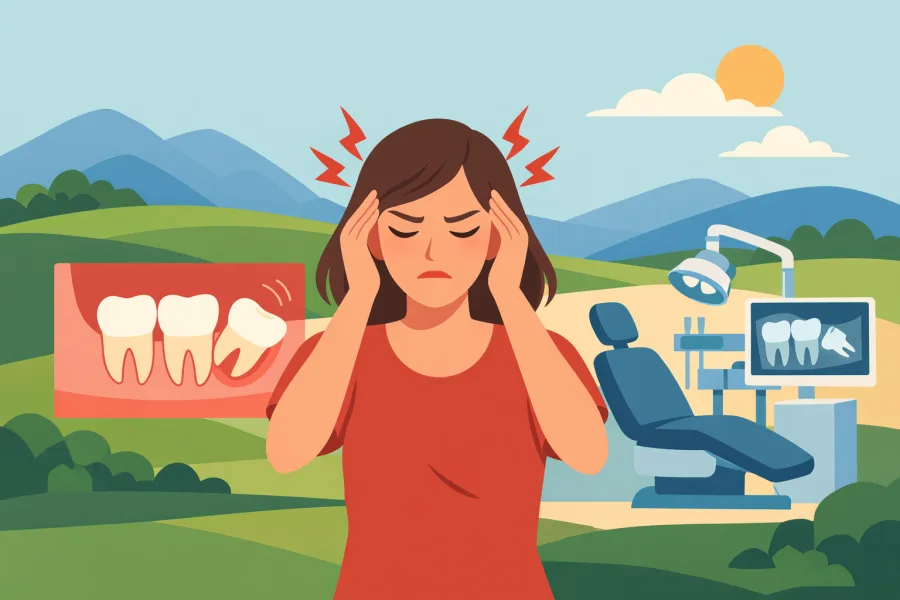
Persistent headaches are commonly blamed on workplace stress, digital eye strain, dehydration, or poor sleep habits. However, when throbbing pain concentrates around your temples, radiates behind the eyes, or throbs at the base of your skull alongside jaw tightness, the root source often lies within your dental arches. The emergence, impaction, or chronic infection of third molars (wisdom teeth) frequently triggers debilitating craniofacial headaches through complex neural pathways and muscular compensation.
At Oral & Facial Surgery of Miami, board-certified oral and maxillofacial surgeon Dr. Johanny Caceres frequently evaluates patients whose recurring tension headaches, cluster sensations, or facial pressure were resolved only after addressing impacted third molars. Understanding the anatomical connections between your dental anatomy, the trigeminal nerve network, and your masticatory muscles reveals why wisdom teeth and persistent headaches are so intimately linked.
1. Neurological Pathways: Trigeminal Nerve Irradiation and Referred Pain
The human jaw and facial structures are innervated primarily by the trigeminal nerve (Cranial Nerve V), the largest sensory nerve in the head. The trigeminal nerve splits into three distinct branches: the ophthalmic branch (forehead, eyes), the maxillary branch (upper jaw, sinuses, mid-face), and the mandibular branch (lower jaw, chin, lower teeth). Because all three divisions converge at the trigeminal ganglion before transmitting sensory signals to the brainstem, intense irritation in one branch can easily refer pain signals across another.
When a lower wisdom tooth develops horizontally or becomes deeply impacted against dense cortical bone, its developing root tips often press directly against or lie in close proximity to the inferior alveolar nerve (a primary division of the mandibular branch). Chronic compression and localized inflammation do not stay isolated in the jaw. The sensory input overflows into shared central neural pathways, causing the brain to interpret the dental trauma as a diffuse temple headache, retro-orbital ache behind the eyes, or radiating occipital pain at the back of the skull.
2. Musculoskeletal Strain: TMJ Overload, Malocclusion, and Bruxism
The eruption of wisdom teeth requires adequate space along the alveolar ridge. Because modern jaws frequently lack room for four additional large molars, erupting wisdom teeth exert forward axial pressure against the entire dental arch. This continuous anterior push shifts adjacent second molars, disrupting your natural dental occlusion (bite alignment). When your teeth no longer interlock harmoniously, your masticatory muscles (temporalis, masseter, and pterygoid muscles) must work overtime to stabilize your jaw during chewing, swallowing, and speaking.
This chronic muscular overcompensation generates severe strain in the temporomandibular joint (TMJ) and the broad temporalis muscle spanning the side of your skull. Patients frequently develop secondary nocturnal bruxism (clenching and grinding teeth during sleep) in an instinctive, subconscious attempt to grind away the interdental interference. As a result, patients wake up each morning with profound bilateral temple pain, neck stiffness, and dull frontal headaches that mimic chronic tension-type cephalalgia.
| Headache Characteristic | Primary Tension / Migraine | Wisdom Tooth Referred Cephalalgia |
|---|---|---|
| Primary Location | Forehead band, unilateral hemicranial, or generalized skull | Temples, behind the eye, TMJ preauricular region, and angle of mandible |
| Associated Oral Clues | None; strictly neurological or systemic triggers | Posterior gum tenderness, pericoronitis, jaw stiffness, clicking TMJ |
| Aggravating Factors | Bright light, sound, fatigue, missed meals, screen glare | Firm chewing, wide mouth opening, morning wakefulness after clenching |
| Response to Analgesics | Variable; responds to triptans, NSAIDs, or rest | Temporary dampening by NSAIDs, but promptly returns as structural pressure persists |
| Definitive Resolution | Neurological management and lifestyle modifications | Surgical extraction of impacted third molars by a specialist |
3. Upper Wisdom Teeth and Maxillary Sinus Pressure
Upper wisdom teeth present a distinctive anatomical relationship with the maxillary sinuses (the hollow air cavities situated directly beneath your eye sockets and behind your cheekbones). The roots of upper third molars often sit in direct contact with or indent the thin bony floor of the sinus cavity. When an upper wisdom tooth becomes impacted or develops a follicular cyst, swelling and structural pressure displace the sinus lining.
Furthermore, partially erupted upper molars are notoriously difficult to clean, creating a haven for anaerobic oral bacteria. Chronic pericoronal inflammation can extend superiorly into the sinus floor, producing odontogenic sinusitis. Patients routinely mistake this condition for seasonal allergies, sinus migraines, or weather-induced pressure headaches. Typical symptoms include severe mid-facial aching, a heavy fullness when bending forward, and persistent frontal headaches centered above the cheekbones and behind the bridge of the nose.
4. Clinical Diagnosis, Surgical Relief, and Coral Gables Care
Living on daily painkillers or masking symptoms with heating pads provides only transient relief if an impacted tooth is mechanically compressing nerve tissue or deranging your jaw mechanics. Long-term management requires definitive diagnostic imaging and targeted surgical intervention. During your comprehensive consultation at Oral & Facial Surgery of Miami, Dr. Johanny Caceres utilizes high-resolution 3D Cone Beam Computed Tomography (CBCT) to map the exact spatial relationships between third molar roots, the mandibular canal, and the maxillary sinus floor.
If your examination indicates that your headaches stem from third molar impaction, elective extraction under outpatient IV sedation provides swift, lasting relief. Removing the source of chronic peripheral nerve irritation decompresses the trigeminal pathways, allows the temporalis and masseter muscles to relax, and restores balance to your temporomandibular joints. Most patients experience substantial abatement of their chronic headaches within the first few weeks of surgical healing.
If you are struggling with recurring headaches, unexplained temporal throbbing, or facial pressure, contact our surgical team today at (305) 552-1193 or request your consultation online to uncover the underlying cause and reclaim your comfort.