
Wisdom Teeth vs. Other Molars: What’s the Real Difference?
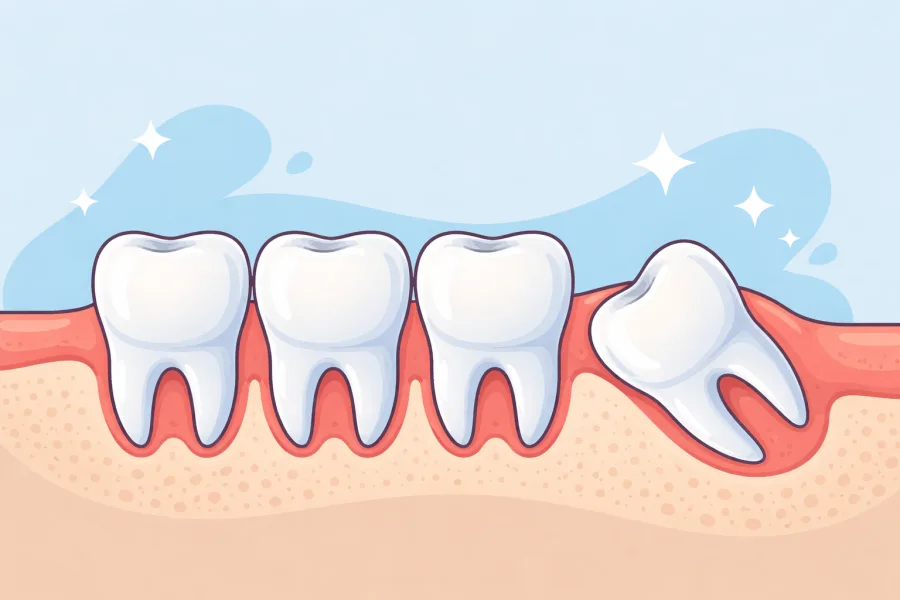
Molars are the heavy-duty grinding machines of the human mouth. Positioned in the posterior regions of the upper and lower jaws, these broad, multi-cusped teeth break down fibrous, tough foods before swallowing. While first and second molars integrate naturally into an adult dental arch, third molars, commonly called wisdom teeth, frequently present severe developmental and surgical complications.
At Oral and Facial Surgery of Miami, board-certified oral and maxillofacial surgeon Dr. Johanny Caceres evaluates third molars relative to adjacent dentition. Understanding how wisdom teeth differ from your permanent first and second molars helps clarify why extraction is so often recommended while other molars are preserved.
Anatomical Architecture: First, Second, and Third Molars
A complete adult dentition includes twelve molars, evenly split with three in each quadrant of the mouth. First molars, often referred to as six-year molars, erupt behind primary baby teeth and serve as the foundational cornerstones of your bite and facial height. Second molars, or twelve-year molars, erupt directly behind the first molars during early adolescence to provide additional chewing surface.
Third molars are the final teeth to develop in human biology. Structurally, while first and second molars feature standardized, predictable anatomy with distinct divergent roots, wisdom teeth display wide anatomical variation. Third molars often possess fused, hooked, or severely curved root systems. Their occlusal anatomy is frequently irregular, and their position at the extreme posterior corner of the jaw makes routine hygiene exceptionally difficult.
| Molar Classification | Typical Eruption Age | Root Morphology | Impaction Frequency |
|---|---|---|---|
| First Molars (6-Year) | Ages 6 to 7 | Predictable, separate divergent roots | Extremely rare (under 1%) |
| Second Molars (12-Year) | Ages 11 to 13 | Stable, well-anchored root structures | Very rare (under 2%) |
| Third Molars (Wisdom Teeth) | Ages 17 to 25 | Unpredictable; often fused, hooked, or curved | Extremely high (over 70% in modern jaws) |
Eruption Timing and Evolutionary Jaw Size Mismatch
The primary reason wisdom teeth cause complications where other molars succeed relates directly to modern human evolutionary biology. Prehistoric hominids possessed larger, broader jaws capable of accommodating thirty-two large teeth to process unprocessed, fibrous diets.
Over millennia, cooking techniques and agricultural advancements reduced the physical demand on human masticatory muscles, causing human jawbones to become smaller over generations. However, genetic coding for thirty-two teeth remains largely intact. Because wisdom teeth emerge last, between ages seventeen and twenty-five, available alveolar bone space is typically already occupied by first and second molars, forcing third molars to become impacted or erupt at abnormal angles.
Clinical Impaction Risks and Root Morphology
Unlike upright first and second molars that enhance chewing efficiency, impacted wisdom teeth frequently threaten surrounding oral health. A horizontally or mesially tilted wisdom tooth pushes directly into the back surface of the healthy second molar.
This tight contact zone creates an inaccessible trap where food debris and bacteria collect, leading to deep periodontal pockets and aggressive root resorption on the second molar. In addition, the follicular sac surrounding an unerupted third molar can develop into dentigerous cysts that expand within the jawbone, hollowing out surrounding osseous tissue and compromising structural strength.
Specialized Surgical Care at OFS Miami
Determining whether a third molar requires surgical removal requires advanced diagnostic imaging. At our practice, Dr. Johanny Caceres utilizes low-dose cone-beam 3D computed tomography (CBCT) to evaluate the spatial relationship between wisdom tooth roots and the inferior alveolar nerve canal.
If your wisdom teeth are impacted or jeopardizing adjacent second molars, our surgical facility provides comfortable outpatient extractions under gentle IV twilight sedation. Protecting your healthy first and second molars ensures long-term chewing function and periodontal health.
Protect your smile from wisdom tooth damage. Call Oral and Facial Surgery of Miami at (305) 552-1193 or book your 3D imaging consultation online today.