
Can Wisdom Teeth Trigger Chronic Headaches?
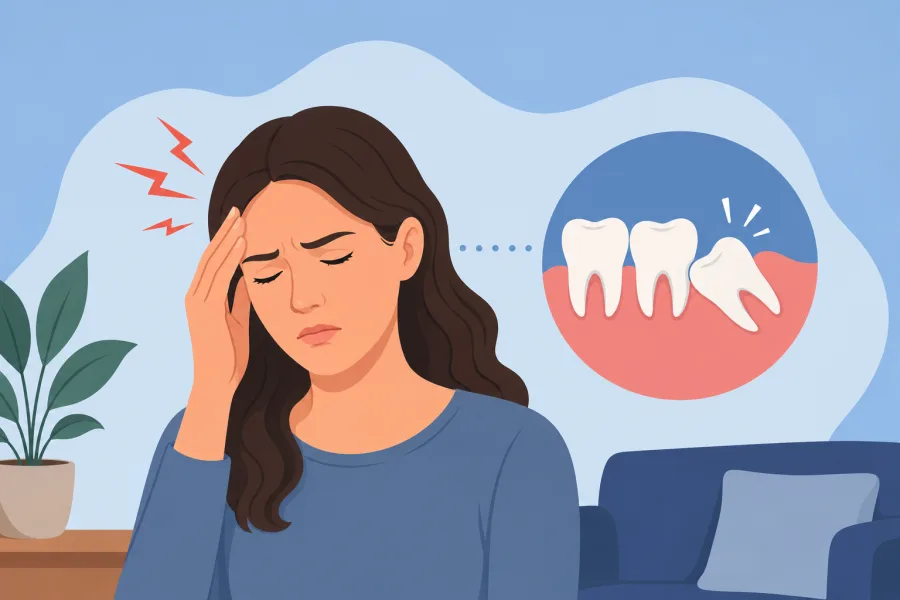
When chronic headaches strike, most people consult their primary care physician, visit a neurologist, or cycle through over-the-counter pain relievers. You might blame eye strain, workplace stress, poor posture, or lack of sleep. Yet for thousands of patients struggling with recurring temple pressure and forehead tightness, the real culprit is hidden deep in the back of the jaw. Impacted, misaligned, or chronically inflamed wisdom teeth frequently trigger referred headaches that mimic tension headaches or migraines.
Understanding the neurological wiring connecting your dental arches to your head, recognizing clinical signs of jaw-induced pain, and knowing when oral surgical intervention provides lasting relief can end months of frustrating headache symptoms.
1. Neurological Pathways: Trigeminal Nerve Convergence and Referred Pain
To understand why a tooth in your lower jaw can make your temples throb, you must look at cranial nerve anatomy. Sensation throughout your face, jaws, teeth, and forehead is governed by the trigeminal nerve (Cranial Nerve V), the largest sensory nerve in the head.
The trigeminal nerve splits into three primary sensory branches:
- Ophthalmic Branch (V1): Supplies sensation to the forehead, scalp, eyes, and upper nasal cavity.
- Maxillary Branch (V2): Innervates the upper jaw, upper molars, cheeks, and maxillary sinuses.
- Mandibular Branch (V3): Provides sensation to the lower jaw, lower teeth, chin, tongue, and the temporalis muscles along the side of the head.
All three branches feed into a shared sensory routing center at the base of the brain called the trigeminocervical nucleus. When an impacted wisdom tooth becomes trapped in bone or develops chronic low-grade pericoronitis, it sends continuous pain signals through the V2 or V3 pathway. In this shared neurological relay center, the brain frequently misinterprets incoming dental signals as coming from the ophthalmic or temporal dermatomes. This biological cross-talk creates classic referred pain, producing a persistent, dull ache across your forehead, temples, or behind the eyes.
2. Musculoskeletal Strain and TMJ Overcompensation
Beyond nerve cross-talk, wisdom teeth trigger headaches through physical muscle fatigue. When your dental arch lacks sufficient space for four full-sized third molars, the emerging teeth alter how your entire jaw functions:
- Bite Prematurities and Muscular Splinting: When a wisdom tooth erupts at an unnatural angle, it often makes premature contact with the opposing tooth before the rest of your bite can seat. To avoid this painful pinch, your masticatory muscles subconsciously adjust the way your jaw closes. This continuous muscular compensation causes the masseter and temporalis muscles to remain in a state of chronic hypertonicity (spasm), radiating tight bands of pain up into the temples.
- Nocturnal Clenching and Bruxism: Subtle dental misalignments are a primary driver of nighttime teeth grinding (bruxism). Patients with impacted third molars often clench their jaws aggressively during sleep, waking up every morning with intense temple soreness, neck stiffness, and tension headaches.
- Temporomandibular Joint (TMJ) Stress: Swelling and localized inflammation in the retro-molar pad stretch the ligaments surrounding the temporomandibular joint, causing clicking, jaw stiffness, and pain that radiates upward into the ear and skull.
| Headache Pattern & Location | Wisdom Tooth Mechanism | Distinguishing Clinical Signs | Treatment Approach |
|---|---|---|---|
| Temporal Tension (Sides of Head) | Temporalis muscle spasm from jaw clenching and altered bite dynamics. | Worse upon waking or after meals; tender to the touch above the ear. | Surgical extraction to relieve muscular splinting; temporary warm compresses and custom nightguards. |
| Sinus & Midface Pressure | Upper wisdom tooth roots pressing into the floor of the maxillary sinus. | Pressure behind eyes and cheekbones; increases when bending forward; no nasal congestion. | 3D CBCT evaluation and delicate atraumatic removal of upper third molars. |
| Occipital & Neck Aches | Postural compensation and cervical muscle splinting due to lower jaw pain. | Tightness traveling from base of skull down into the trapezius and shoulder. | Removal of lower impactions; posture therapy and physical therapy modalities. |
| Episodic Throbbing Pain | Acute pericoronitis flare-up with trigeminal sensory hyper-sensitization. | Foul taste, swollen gum flap behind molars, difficulty opening mouth (trismus). | Antibacterial irrigation, targeted antibiotics, and prompt surgical extraction. |
3. Is Your Headache Dental? Key Diagnostic Clues
Because tension headaches and migraines share overlapping symptoms, how can you determine whether your headache originates in your teeth? Several hallmark signs indicate a dental origin:
- Tenderness in the Back of the Mouth: Pressing your finger or tongue firmly against the gum tissue directly behind your second molars reproduces or intensifies the headache ache in your temple.
- Asymmetrical Facial Symptoms: Headaches that consistently occur on the same side as an impacted or partially erupted wisdom tooth strongly point toward an odontogenic cause.
- Pain Correlating with Chewing: If eating tough, chewy foods or chewing gum reliably triggers a temple ache within 30 minutes, masticatory muscle exhaustion is the primary factor.
- Lack of Typical Migraine Symptoms: True migraines frequently involve neurological auras (flashing lights, blind spots), extreme photophobia (light sensitivity), and severe nausea. Wisdom tooth headaches typically present as heavy, dull pressure or steady throbbing without sensory auras.
4. Achieving Permanent Relief with Dr. Johanny Caceres
Taking pain medications daily only masks symptoms while the underlying bone and nerve irritation continues to worsen. In patients whose headaches stem from third molar impaction, surgical extraction provides a definitive, permanent resolution. Once the physical pressure source is eliminated, the trigeminal nerve settles, masseter and temporalis spasms relax, and headache frequency dramatically drops within one to three weeks post-procedure.
At our practice, Dr. Johanny Caceres, a board-certified oral and maxillofacial surgeon, utilizes high-resolution 3D Cone-Beam CT (CBCT) imaging to identify hidden impactions, measure nerve proximity, and evaluate maxillary sinus involvement. Located in Coral Gables, our practice specializes in gentle, computer-guided third molar extractions performed under IV sedation or local anesthesia for maximum patient comfort.
If you are struggling with unexplained headaches alongside jaw tenderness, explore our guides on teeth grinding and facial stress, recognizing when wisdom tooth pain is an emergency, and distinguishing between toothaches and third molar pain.
Stop living with chronic head and jaw pressure. Contact our surgical team at (305) 552-1193 or schedule your comprehensive consultation online through our appointment reservation portal.