
Dental Implants vs Bridges: Which Is Right for You?
Losing a tooth triggers immediate practical challenges. Chewing becomes awkward, adjacent teeth slowly drift into the gap, and smiling can cause sudden self-consciousness. When exploring how to fill the space, most patients find themselves weighing two primary clinical solutions: a traditional fixed dental bridge or a modern dental implant.
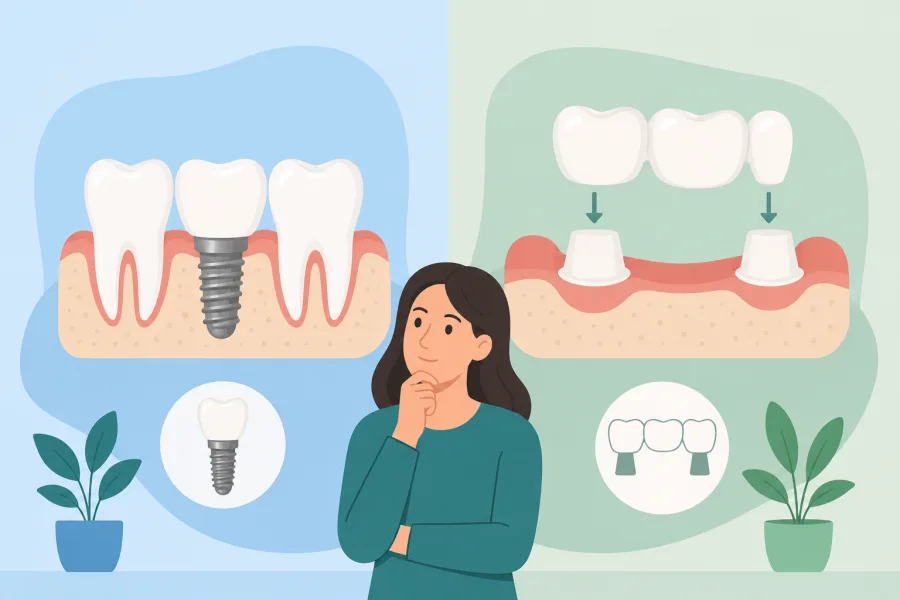
While both restorations visually replace the crown of the missing tooth, they function on fundamentally different biological principles. A bridge rests above the gumline and borrows strength from neighboring teeth, whereas an implant replaces the underlying tooth root directly in the bone. Understanding how these mechanical differences affect your long-term oral health helps you make the right choice for your smile.
Biological Differences: Root Replacement vs. Tooth-Supported Prosthetics
The core distinction between an implant and a bridge lies beneath the gumline:
- The Architecture of a Dental Implant: An implant is a standalone biocompatible titanium cylinder placed surgically into your jawbone. Living bone cells fuse directly to the post through osseointegration. Once healed, the implant acts as an independent artificial root that anchors a custom porcelain or zirconia crown without touching or depending on neighboring teeth.
- The Architecture of a Fixed Bridge: A conventional three-unit bridge consists of an artificial replacement tooth (pontic) suspended between two hollow crowns. To secure the bridge, a general dentist must grind away the healthy enamel of the teeth on either side of the gap, reducing them to pegs to serve as abutment anchors.
Comparing Longevity, Hygiene, and Structural Health
When choosing a restoration, daily hygiene requirements and expected lifespan are essential considerations:
- Jawbone Preservation: Natural tooth roots transmit chewing pressure into the alveolar bone, signaling the body to maintain bone density. An implant replicates this stimulation, preventing bone loss. Under a bridge pontic, the empty bone ridge receives no stimulation and naturally shrinks over time, creating an unsightly gap beneath the bridge.
- Daily Cleaning and Flossing: An implant cleans exactly like a natural tooth; you brush and floss between teeth effortlessly. A bridge is fused as a single solid unit, requiring special floss threaders or interdental brushes to pull plaque from beneath the artificial tooth.
- Failure Risk and Recurrent Decay: Implants cannot decay. Bridges, however, create vulnerable margins around the supporting natural teeth. If bacteria slip beneath a crown margin, tooth decay can develop undetected, often requiring root canal therapy or total bridge replacement within 7 to 10 years.
When to Choose an Implant vs. When a Bridge Makes Clinical Sense
While dental implants represent the gold standard in modern tooth replacement, each patient presents unique anatomical and medical circumstances:
- When Implants Are Strongly Preferred: If neighboring teeth are completely healthy, filling, or cavity-free, cutting them down for a bridge causes unnecessary irreversible damage. Implants are also superior for younger patients who will benefit from decades of bone preservation.
- When a Bridge May Be Considered: If the teeth adjacent to the missing gap already have large, failing fillings or extensive decay that require full-coverage crowns anyway, crowning them as bridge abutments can be efficient. A bridge also delivers a faster result, usually completed in two to three weeks without surgical osseointegration healing.
- Medical Contraindications: Patients with severe medical conditions that prevent minor outpatient oral surgery may opt for non-surgical bridge placement.
Personalized Restorative Surgery with Dr. Johanny Caceres in Coral Gables
Choosing between an implant and a bridge requires an accurate assessment of your bone volume, gum health, and biting dynamics. At Oral & Facial Surgery of Miami, board-certified oral and maxillofacial surgeon Dr. Johanny Caceres uses 3D cone-beam CT imaging to inspect bone quality and help you decide on the safest, longest-lasting solution.
We work collaboratively with your general dentist to ensure that your surgical foundation supports a seamless, lifelike crown. To explore your tooth replacement options, contact Oral and Facial Surgery of Miami today at (305) 552-1193 or schedule your surgical consultation online.