
Long-Term Care Tips for Healthy Dental Implants
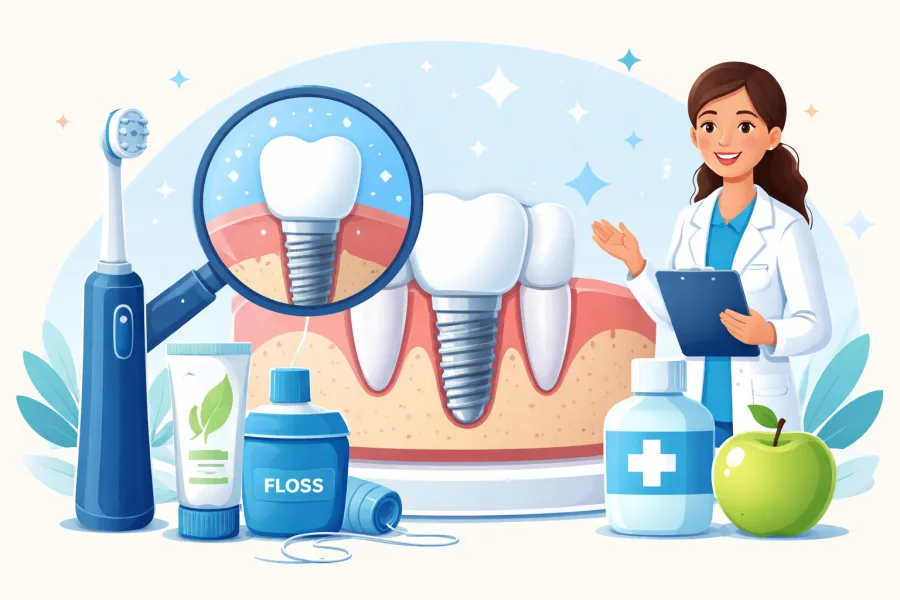
Receiving dental implants is one of the most rewarding investments you can make in your oral health. Once osseointegration is complete, implants look, feel, and function just like healthy natural teeth. However, because titanium posts and ceramic crowns cannot develop traditional tooth cavities, some patients mistakenly assume they require zero maintenance.
While the artificial materials are immune to decay, the living gum tissue and alveolar bone anchoring them remain vulnerable to plaque bacteria and mechanical stress. Establishing diligent daily hygiene habits and scheduling regular professional cleanings are essential to protect your investment for decades to come. Here is your comprehensive guide to long-term dental implant care.
The Biology of Implant Longevity: Protecting the Bone-to-Titanium Interface
To understand why implant maintenance matters, it helps to understand how implants anchor into your anatomy:
- Direct Bone Integration: Unlike natural teeth that are suspended by a shock-absorbing periodontal ligament, dental implants fuse directly to living bone via osseointegration. This creates exceptional rigidity, but it also means the junction between the implant collar and surrounding gum tissue relies on a delicate mucosal seal.
- The Threat of Peri-Implant Mucositis: When food debris and plaque accumulate around the implant collar, bacteria trigger inflammation in the surrounding gums. Known as peri-implant mucositis, this initial stage is completely reversible with prompt professional cleaning.
- Progression to Peri-Implantitis: If gum inflammation is left untreated, bacterial colonies migrate deeper along the implant threads, destroying crestal bone. This condition, called peri-implantitis, is the leading cause of late implant failure and requires advanced surgical intervention to resolve.
Daily Home Hygiene: Tools and Techniques for Cleaning Around Implants
Effective home care keeps plaque from hardening into calculus along the implant abutment:
- Soft-Bristled or Sonic Toothbrushes: Brush twice daily for two full minutes using non-abrasive toothpaste. Avoid harsh whitening pastes containing silica or baking soda, which can create micro-scratches on polished ceramic crowns and titanium collars.
- Water Flossers (Oral Irrigators): Water flossing using a low to medium pressure setting is exceptionally gentle and effective for flushing trapped food debris and anaerobic bacteria from beneath implant crowns and full-arch bridges.
- Implant-Specific Floss and Interdental Brushes: When using string floss, select spongy implant floss designed not to shred. If using interdental brushes, ensure the central wire is coated in nylon or plastic to prevent metal-on-metal scratching against the implant neck.
- Alcohol-Free Antibacterial Rinses: Incorporating an alcohol-free antimicrobial mouthwash helps control oral bacteria without drying delicate oral mucosal tissues.
Preventing Peri-Implantitis, Bruxism Strain, and Biomechanical Complications
Beyond daily brushing, shielding your implants from excessive bite force and systemic risk factors is crucial:
- Custom Night Guards for Teeth Grinding: Chronic nighttime clenching or grinding (bruxism) places extreme lateral force on restorations. Because implants lack a flexible periodontal ligament, heavy grinding can loosen screws, fracture porcelain crowns, or cause bone micro-fractures. A custom hard-acrylic night guard absorbs these forces safely.
- Tobacco and Nicotine Cessation: Nicotine constricts blood vessels in the gingiva, reducing oxygen delivery and white blood cell activity around the bone. Smokers experience nearly double the rate of peri-implant bone loss compared to non-smokers.
- Avoid Chewing Hard Objects: Never crunch ice cubes, hard candy, or unpopped popcorn kernels, and never use your teeth to rip open plastic packaging.
Long-Term Surgical Monitoring with Dr. Johanny Caceres in Coral Gables
Visiting your restorative dentist every six months and having periodic evaluations with your oral surgeon ensures that subtle bone changes are detected long before you feel discomfort. Board-certified oral and maxillofacial surgeon Dr. Johanny Caceres uses digital low-dose radiography and diagnostic probing to monitor bone stability and tissue health around implants.
If you notice bleeding when brushing, localized gum swelling, or any looseness in an existing implant crown, do not wait. Prompt evaluation can easily save an implant and preserve your smile. Contact Oral & Facial Surgery of Miami in Coral Gables at (305) 552-1193 or schedule your implant evaluation online.