
Oral Surgery for Seniors: What to Know Before, During, and After Treatment
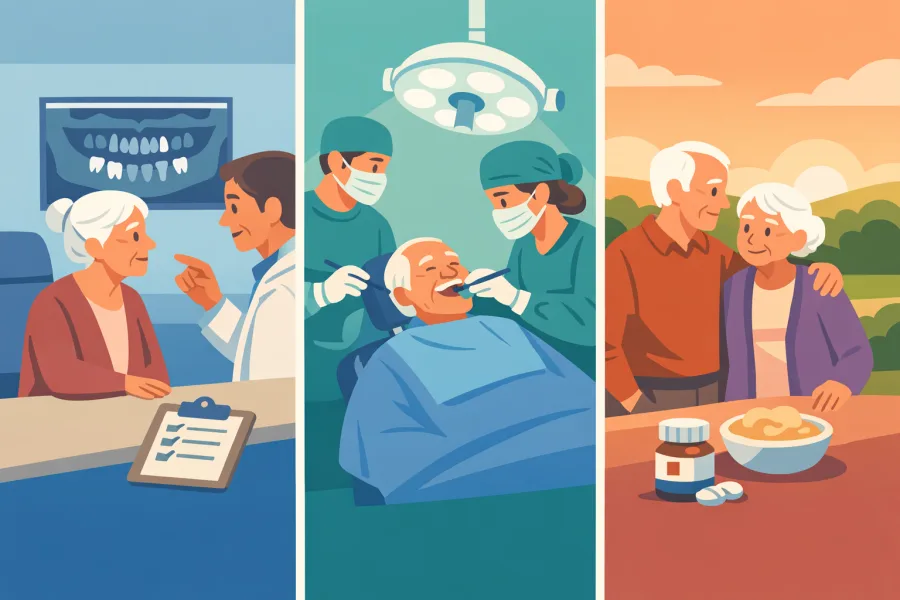
As lifespans extend and adults maintain their natural teeth well into their seventies, eighties, and beyond, the demand for specialized geriatric oral surgery continues to grow. Whether addressing non-salvageable broken teeth, placing stabilizing dental implants, or treating jawbone lesions, surgical care in older adults requires a comprehensive medical perspective that accounts for chronic systemic health conditions and healing physiology.
At Oral and Facial Surgery of Miami, board-certified oral and maxillofacial surgeon Dr. Johanny Caceres brings extensive hospital-based residency training to senior surgical planning. By coordinating directly with primary care physicians and cardiologists, our practice ensures every surgical procedure is safe, gentle, and highly effective.
Medical History and Polypharmacy Considerations
Oral surgical planning for senior patients begins with an exhaustive review of systemic medical history and daily medications. Many older adults manage cardiovascular hypertension, type 2 diabetes, renal disease, or osteoporosis. Routine medications can profoundly influence surgical outcomes and clotting mechanisms.
For example, patients taking anticoagulants or antiplatelet therapies require precise peri-operative management to balance bleeding control without increasing thromboembolic risks. Similarly, patients with a history of antiresorptive medications, such as oral or intravenous bisphosphonates for osteoporosis, require careful evaluation to minimize the risk of medication-related osteonecrosis of the jaw (MRONJ). Dr. Caceres liaises directly with your prescribing physicians to customize medication protocols safely before treatment begins.
| Clinical Factor | Physiological Impact | Specialized Surgical Protocol |
|---|---|---|
| Blood Thinners | Prolonged bleeding time, delayed clot stabilization | Hemostatic agents, collagen plugs, and secure primary sutures |
| Bone Density / Osteopenia | Reduced trabecular volume, cortical brittleness | Gentle piezosurgical instrumentation and biological bone grafting |
| Cardiovascular History | Hemodynamic sensitivity to stress and epinephrine | Continuous vital signs monitoring and cardiac-safe local anesthetics |
| Reduced Tissue Elasticity | Fragile oral mucosa prone to tearing or delayed closure | Atraumatic flap reflection and non-tension resorbable suturing |
Bone Quality, Healing Dynamics, and Grafting in Older Adults
As jawbones age, microvascular density decreases and bone remodeling rates slow down. While younger individuals replace bone rapidly, older adults exhibit a more gradual cellular healing response. This biological reality does not prevent successful surgery, but it requires atraumatic surgical technique.
During tooth extractions, Dr. Caceres utilizes specialized periotomes and micro-elevators to separate root attachments without fracturing delicate socket walls. When placing dental implants or preparing the ridge for prosthetics, bone grafting materials rich in osteoconductive scaffolding are placed into extraction sockets to preserve alveolar width and height, preventing subsequent collapse of facial contours.
Tailored Anesthesia and Sedation Protocols for Senior Safety
Safety and emotional ease are essential when senior patients undergo oral surgical procedures. Because older adults metabolize medications more slowly and have higher sensitivities to central nervous system agents, general hospital anesthesia is often unnecessary and carries prolonged recovery times.
In our surgical suite, Dr. Caceres utilizes carefully titrated intravenous sedation protocols customized for geriatric physiology. Fast-acting, short-duration medications provide deep relaxation and complete amnesia without suppressing respiratory function. Real-time multi-parameter monitoring, tracking continuous blood pressure, pulse oximetry, end-tidal capnography, and electrocardiograms, guarantees optimal safety from start to finish.
Post-Operative Support and Restorative Care at OFS Miami
Comprehensive surgical care extends well beyond the operating room. Older adults need clear, accessible recovery plans that coordinate smoothly with family members or designated caregivers.
At our practice, we provide large-print written instructions, personalized nutritional recommendations, and scheduled telephone follow-ups to ensure comfort. Non-opioid multimodal analgesia protocols, pairing scheduled acetaminophen and anti-inflammatory medications, control post-operative swelling and discomfort effectively while avoiding narcotic side effects like drowsiness, constipation, or balance impairment.
If you or an older family member requires oral surgical consultation, trust our board-certified surgical team. Call Oral and Facial Surgery of Miami at (305) 552-1193 or request an appointment online today.