
Quiz: Are Your Wisdom Teeth Starting to Cause Trouble?
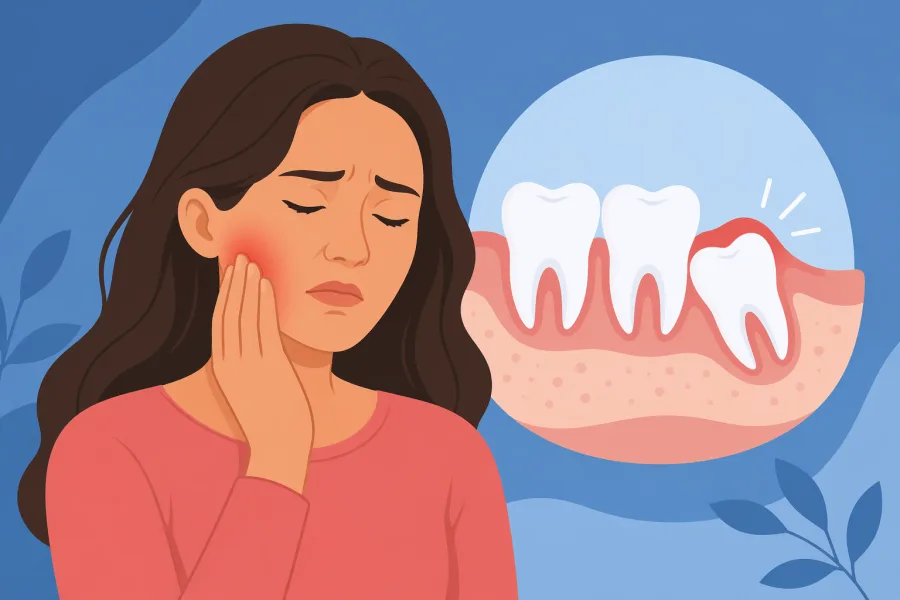
Third molars are the last teeth to develop, typically attempting to emerge between the ages of 17 and 25. Because modern human jaws frequently lack sufficient space to accommodate these large molars, they often become impacted, grow at awkward angles, or remain partially trapped under the gums. Spotting early warning signs before severe infections or structural damage occur is vital for protecting your smile.
At Oral and Facial Surgery of Miami, board-certified oral and maxillofacial surgeon Dr. Johanny Caceres frequently evaluates patients who dismissed early symptoms until a painful emergency arose. This clinical self-assessment helps you evaluate your symptoms and understand when it is time to seek professional evaluation.
Self-Assessment: Key Warning Signs of Third Molar Impaction
Wisdom tooth problems rarely appear overnight; they typically start as subtle, intermittent warning signs that patients dismiss as temporary soreness. Ask yourself if you have experienced tender, swollen, or bleeding gums at the very back of your mouth when brushing. An inflamed gum flap (operculum) over a partially erupted tooth easily traps food debris and bacterial plaque.
Another common sign is radiating pressure along the jawline or toward your ears and temples. When an impacted molar pushes horizontally against neighboring teeth, it generates localized alveolar bone strain and referred tension headaches. If you notice an unpleasant taste or chronic foul odor that persists even after thorough brushing, bacteria may be flourishing in deep subgingival crevices around the erupting tooth.
| Self-Assessment Symptom | Underlying Pathology | Urgency Level | Recommended Clinical Action |
|---|---|---|---|
| Tender or Swollen Back Gums | Pericoronitis and bacterial food entrapment | Moderate | Warm saline rinses and surgical consultation |
| Persistent Dull Jaw Ache | Bone impaction and pressure on second molars | Moderate to High | 3D CBCT diagnostic imaging to check root resorption |
| Jaw Stiffness / Restricted Opening | Trismus from spreading masseter muscle inflammation | High / Urgent | Prompt oral surgical assessment and targeted antibiotics |
| Persistent Foul Taste or Odor | Anaerobic bacterial colonies beneath operculum | Moderate | Professional debridement followed by planned extraction |
The Clinical Symptom Scorecard: Rating Your Oral Discomfort
To understand how urgent your situation is, consider how many symptoms you currently experience and their severity:
Mild Symptoms (1 to 2 occasional signs): Intermittent tenderness when chewing firm foods or mild bleeding when flossing the back corners. This stage indicates early eruption difficulty. A proactive consultation allows monitoring before structural complications develop.
Moderate to Severe Symptoms (3 or more persistent signs): Daily throbbing, difficulty opening your mouth fully (trismus), swelling in the cheek, or pain radiating into the neck. These signs point to an active localized infection or significant physical impaction. Delaying treatment risks deep fascial space infections, cyst expansion, or irreversible root damage to adjacent molars.
Underlying Anatomical Pathology Behind the Symptoms
Why do wisdom teeth create so much trouble? The human mandible and maxilla have evolved smaller over millennia, leaving insufficient room behind the second molars. When a third molar cannot emerge upright, it becomes trapped in bone (bony impaction) or partially breaks through the mucosa (soft tissue impaction).
Partially erupted teeth create a biological trap where destructive bacteria destroy the periodontal ligament and alveolar bone. In addition, un-erupted teeth are enclosed in a dental follicle that can undergo cystic transformation. Dentigerous cysts silently hollow out bone from the inside out, weakening the jawbone and threatening vital nerves.
Next Steps: Comprehensive 3D Evaluation at OFS Miami
If your self-assessment reveals warning signs, guessing is unnecessary. At our practice, Dr. Johanny Caceres uses advanced 3D Cone Beam CT imaging to pinpoint the exact orientation of your wisdom teeth, their proximity to your sensory nerves, and the health of adjacent second molars.
Should surgical removal be recommended, our modern surgical facility provides gentle outpatient IV sedation, ensuring you rest comfortably with complete amnesia of the procedure. Addressing problem teeth early prevents acute emergencies, eliminates recurring pain, and safeguards your long-term oral wellness.
Do not wait for mild symptoms to become severe emergencies. Call Oral and Facial Surgery of Miami today at (305) 552-1193 or schedule your 3D evaluation online today.