
What Really Happens If You Don’t Remove Problem Wisdom Teeth
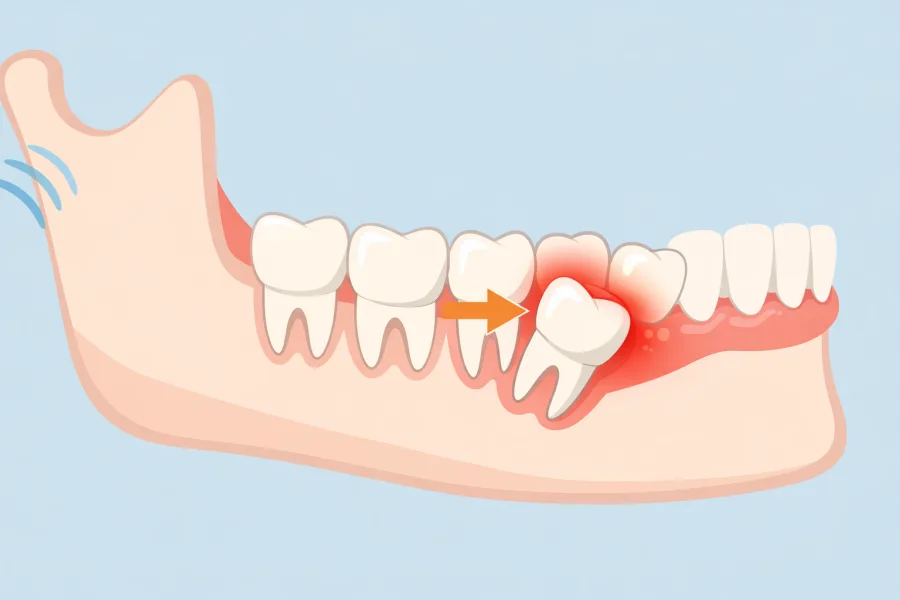
When wisdom teeth do not cause acute pain, it is easy to delay or decline recommended extraction. Many patients assume that as long as a tooth remains quiet, no harm is occurring. However, in oral and maxillofacial surgery, clinical experience demonstrates that problem wisdom teeth rarely remain benign over a lifetime. Leaving impacted or partially erupted third molars untreated leads to progressive biological destruction.
At Oral and Facial Surgery of Miami, board-certified oral and maxillofacial surgeon Dr. Johanny Caceres frequently treats adults suffering from severe complications caused by decades of neglected third molars. Examining what truly occurs inside the jaw when problem teeth are retained empowers you to take proactive steps to protect your natural smile.
The Progression of Chronic Bacterial Infection: From Operculum to Abscess
When a wisdom tooth partially breaches the gumline, it creates a persistent flap of tissue known as an operculum. Because this tissue ledge covers part of the chewing surface at the very back of the jaw, daily tooth brushing and flossing cannot reach beneath it. Food debris, saliva, and aggressive anaerobic bacteria gather inside this protected environment.
Initially, this triggers mild, recurrent episodes of pericoronitis: localized redness, foul odor, and soreness. Over time, however, the bacterial colony expands. If left untreated, the infection can breach surrounding facial fascias, producing severe neck cellulitis or deep space abscesses that restrict breathing, cause trismus (jaw locking), and require emergency hospital admission for intravenous antibiotic therapy.
| Clinical Pathology | Biological Mechanism | Long-Term Health Consequence | Recommended Intervention |
|---|---|---|---|
| Chronic Pericoronitis | Trapped anaerobic bacteria under operculum | Spreading facial abscess, severe trismus, dysphagia | Planned outpatient surgical extraction |
| Second Molar Decay | Food impaction at interdental cementoenamel junction | Subgingival root caries, loss of functional second molar | Proactive third molar removal before root rot occurs |
| Dentigerous Cyst Formation | Fluid distension within un-erupted dental follicle | Mandibular bone hollowing, pathological fracture risk | Cyst enucleation and surgical odontectomy |
| Adult Surgical Complexity | Complete root closure, hyperdense jawbone | Extended recovery periods and higher dry socket rates | Early preventative removal in teens / early twenties |
Irreversible Second Molar Destruction: Root Caries and Resorption
Perhaps the most devastating long-term price of retaining problem third molars is the permanent loss of the adjacent second molars. When a third molar tilts forward, its crown rests firmly against the cervical neck of the second molar. This contact creates an un-cleanable trap below the gumline.
Over five to fifteen years, bacterial acids rot the second molar root from the outside in. Simultaneously, the physical pressure of the impaction can trigger external root resorption, where the body dissolves the root structure of the healthy tooth. In many instances, by the time the patient develops a painful toothache, the second molar root is hollowed out beyond the reach of crowns or root canals, forcing the extraction of both teeth.
Silent Bone Damage: Dentigerous Cysts and Structural Weakening
Even wisdom teeth that remain completely buried inside the bone carry significant risks. Every un-erupted tooth is enclosed within a microscopic sac called a dental follicle. Over time, cellular secretions can cause this sac to swell with fluid, forming an expanding odontogenic cyst.
These cysts grow silently without causing pain, slowly hollowing out the interior cortical and cancellous bone of the lower jaw. As the cyst expands, it erodes the structural integrity of the mandible, rendering the jaw susceptible to spontaneous fractures from minor everyday impacts. Advanced cysts can also compress the inferior alveolar nerve canal, causing permanent numbness or tingling across the chin and lip.
Proactive Surgical Intervention and IV Sedation at OFS Miami
Waiting for retained wisdom teeth to cause symptoms transforms a predictable preventative procedure into a complex restorative emergency. At our practice, Dr. Johanny Caceres utilizes high-definition 3D Cone Beam CT scans to examine your jawbone and detect silent pathology before irreversible damage occurs.
our modern surgical center provides gentle outpatient IV sedation, ensuring you rest peacefully while problem teeth are removed gently and accurately. Acting proactively preserves your healthy teeth, protects your jawbone, and ensures lasting oral wellness.
Protect your dental health with an expert surgical evaluation. Call Oral and Facial Surgery of Miami today at (305) 552-1193 or schedule your appointment online today.