
Main Cause of Delayed Wisdom Tooth Removal
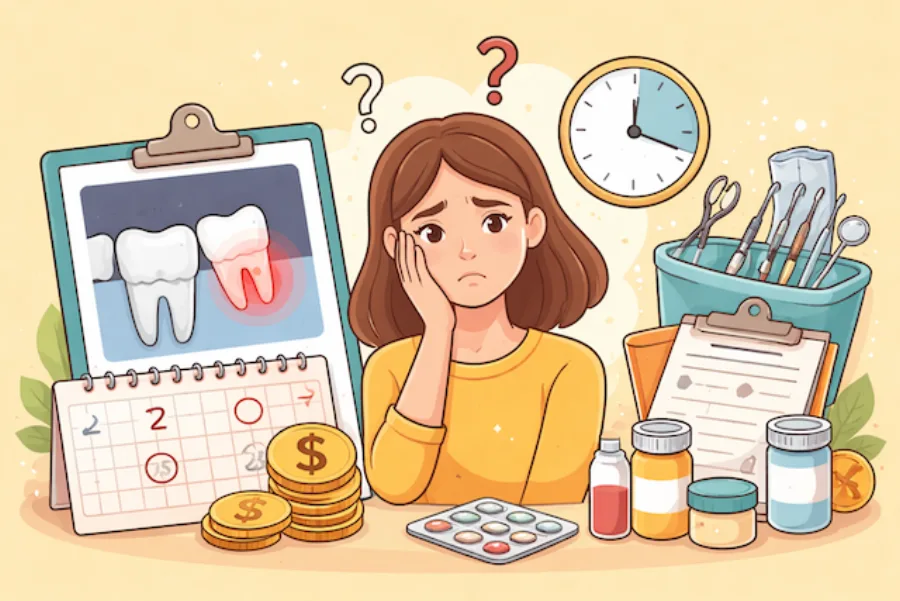
Postponing surgical dental procedures is an understandable human instinct, particularly when wisdom teeth are not causing immediate pain. Many patients assume that absent severe discomfort, third molars can remain untouched indefinitely. However, asymptomatic wisdom teeth frequently harbor silent destructive processes beneath the gumline that worsen steadily over time.
At Oral and Facial Surgery of Miami, board-certified oral and maxillofacial surgeon Dr. Johanny Caceres frequently treats complex complications that arise from delayed extractions. Understanding the biological realities of postponed care helps you take proactive steps to protect your permanent teeth and jaw health.
The Psychology and Causes Behind Delaying Oral Surgery
The most common reason patients postpone wisdom tooth surgery is dental anxiety or fear of the unknown. Anticipation of surgical pain, needles, or post-operative downtime causes many individuals to ignore clinical recommendations until an acute emergency forces action.
Financial uncertainty and busy work schedules also contribute to delays. Young adults entering college or starting new careers often deprioritize preventative healthcare. Unfortunately, what begins as a minor scheduling postponement can easily stretch into five or ten years, during which time tooth roots grow deeper and jawbone density increases significantly.
| Postponement Timeline | Root & Bone Development | Primary Pathological Risk | Surgical & Recovery Outlook |
|---|---|---|---|
| Ages 16 to 21 (Ideal Window) | Roots two-thirds formed, bone pliable and flexible | Early impaction without adjacent tooth erosion | Fast extraction, rapid bone regeneration, minimal nerve risk |
| Ages 22 to 29 (Moderate Delay) | Complete root elongation, roots near nerve canal | Recurrent pericoronitis flare-ups, localized bone loss | Straightforward surgery, moderate post-op swelling |
| Ages 30+ (Extended Delay) | Dense mineralized bone, curved or hooked root tips | Second molar root resorption, cyst expansion, systemic infection | Microsurgical bone removal, prolonged healing, higher complication rates |
Hidden Biological Consequences of Postponing Treatment
Even when a wisdom tooth causes no conscious pain, chronic low-grade bacterial activity is often underway. An impacted molar wedged against a neighboring second molar creates a microscopic crevice where plaque and oral bacteria thrive.
Because toothbrushes and dental floss cannot reach beneath this impaction shelf, bacteria silently dissolve the enamel and root cementum of the healthy second molar. By the time the patient finally experiences pain, extensive root resorption or deep interproximal decay has often destroyed both teeth, requiring the loss of an irreplaceable functional chewing molar.
Age-Related Surgical Complexities: Teens vs Adults Over Thirty
Age plays a substantial role in oral surgical outcomes. In teenagers and young adults, wisdom tooth roots are only partially developed and blunt at the tips, remaining safely distant from the inferior alveolar nerve canal that runs through the lower jaw.
As humans age into their thirties, forties, and beyond, mandibular bone becomes significantly denser and less elastic. Third molar roots fully lengthen, often developing hooks or wrapping intimately around sensory nerve bundles. Removing wisdom teeth in mature adults requires more surgical bone removal and carries a higher incidence of post-operative alveolar osteitis (dry socket) and transient sensory nerve paresthesia.
Board-Certified Surgical Evaluation at OFS Miami
If you have been delaying wisdom tooth removal out of anxiety or hesitation, modern surgical techniques provide a completely comfortable solution. At our practice, Dr. Johanny Caceres utilizes advanced 3D cone-beam CT scanning to inspect the exact anatomical orientation of your molars before touching a surgical instrument.
With customized IV twilight sedation in our modern surgical center, you will sleep peacefully through the entire procedure without awareness or discomfort. Timely treatment resolves impactions before permanent damage occurs.
Do not wait for wisdom teeth to cause painful emergencies. Contact Oral and Facial Surgery of Miami at (305) 552-1193 or schedule your consultation online today.