
Are Wisdom Teeth Removal Complications Common?
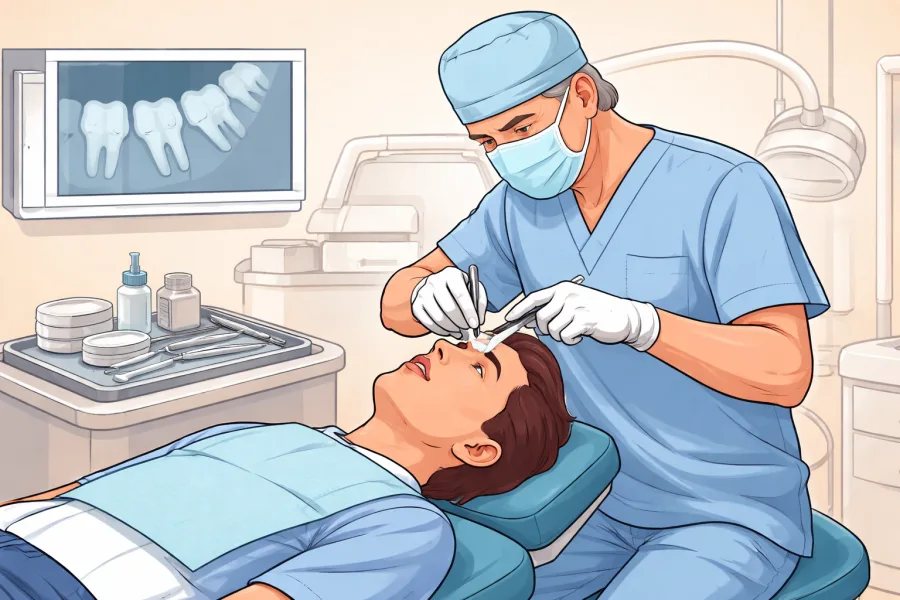
Third molar extraction is one of the most common surgical procedures in modern medicine, with millions of wisdom teeth safely removed each year. Yet when an oral surgeon recommends extracting your third molars, hearing that it is a surgical procedure naturally triggers questions about risk. Patients often worry about severe pain, dry sockets, persistent numbness, or post-operative infections.
The clinical reality is overwhelmingly reassuring. True complications from wisdom teeth removal are rare, and when minor issues do arise, they are highly manageable under experienced surgical care. Understanding the statistical facts, knowing what separates normal healing from a genuine complication, and following proven recovery protocols will give you complete peace of mind.
1. The Statistical Reality: Expected Healing vs. True Complications
A crucial step in easing surgical anxiety is distinguishing between expected post-operative symptoms and actual clinical complications. Because extracting a tooth involves the surrounding gum tissue and jawbone, your body initiates a natural, protective inflammatory response:
- Normal Post-Operative Sequelae: Mild to moderate facial swelling that peaks between hours 48 and 72, jaw muscle stiffness (trismus), minor oozing of pink-tinged saliva during the first 24 hours, and local soreness are completely normal physiological responses. They represent healing in action, not surgical complications.
- True Complications: Genuine surgical complications (such as dry socket, post-operative infection, or prolonged nerve paresthesia) occur in only a small fraction of cases. Overall major complication rates across large-scale maxillofacial clinical studies remain consistently below 1% to 2%.
- Predictable Recovery Curves: In standard healing, discomfort steadily improves after day 3. Any sudden surge of throbbing pain on day 4 or 5 indicates a situation that warrants a quick evaluation by your oral surgeon.
2. The Primary Complications: Incidence, Symptoms, and Solutions
When complications do occur after wisdom tooth removal, they typically fall into three well-understood clinical categories. Modern surgical techniques and targeted treatments make each of these issues straightforward to resolve:
| Potential Issue | Actual Incidence | Primary Cause & Timing | Surgeon Prevention & Solution |
|---|---|---|---|
| Dry Socket (Alveolar Osteitis) | 2% to 5% overall; slightly higher in mandibular impactions. | Premature blood clot loss or breakdown on days 3 to 5; radiating ear pain. | Avoid straws, smoking, and vigorous rinsing; treated in minutes with a soothing eugenol dressing. |
| Post-Operative Infection | Roughly 1% to 2% of surgical extractions. | Bacterial stagnation or trapped food debris; worsening fever, pus, or swelling after day 3. | Gentle warm saline rinses, surgical irrigation, and targeted oral antibiotics when indicated. |
| Temporary Nerve Irritation | 1% to 2% temporary numbness; permanent deficit under 0.5%. | Stretching of the inferior alveolar or lingual nerve near deep lower roots. | 3D CBCT nerve mapping; gentle tooth sectioning; coronectomy option for high-risk roots. |
| Sinus Communication | Less than 1% of upper molar removals. | Upper roots protruding directly through the floor of the maxillary sinus. | Pre-surgical sinus assessment; standard sinus precautions (no nose-blowing) allow spontaneous closure. |
Dry socket remains the most widely discussed complication, yet it is completely non-infectious. It occurs when the protective blood clot inside the socket dissolves prematurely, exposing the underlying alveolar bone to air, food, and fluids. The telltale sign is a dull, throbbing pain radiating toward the ear that develops three to five days after surgery. When patients visit our OFS Miami office with dry socket, we place a medicated sedative dressing that provides noticeable relief within 15 to 30 minutes.
3. Key Factors That Influence Your Surgical Risk
Complication rates are not uniform across all patients. Several anatomical and behavioral variables influence the complexity of your procedure and recovery:
- Patient Age and Bone Density: Patients who undergo wisdom tooth extraction between ages 16 and 22 heal significantly faster. In young adults, the tooth roots are only one-third to two-thirds formed, and the surrounding jawbone is more pliable. After age 25, the bone becomes denser, roots finish developing into complex hooks, and recovery requires slightly more time.
- Depth of Impaction: An erupted tooth that sits straight in the dental arch carries minimal risk. In contrast, a tooth that is horizontally impacted beneath the cortical bone requires precise surgical sectioning to remove safely without disturbing adjacent second molars.
- Tobacco and Nicotine Use: Smoking, vaping, or dipping is the single largest modifiable risk factor for dry socket and delayed healing. The suction generated while inhaling pulls the delicate blood clot from the socket, while nicotine constricts blood vessels, depriving the surgical site of oxygen and healing nutrients. Avoiding nicotine for at least 72 hours post-surgery dramatically lowers your complication risk.
4. Precision Care and Prevention with Dr. Johanny Caceres
Minimizing complication risk begins long before you enter the surgical operatory. At our practice, Dr. Johanny Caceres uses advanced digital protocols to ensure maximum patient safety:
- High-Resolution 3D CBCT Imaging: Unlike traditional flat panoramic X-rays, 3D cone-beam CT scans display the exact millimeter distance between your wisdom tooth roots and the inferior alveolar nerve canal, eliminating guesswork.
- Atraumatic Surgical Sectioning: By gently dividing impacted teeth into smaller fragments, Dr. Caceres removes each segment with minimal pressure on surrounding bone and nerve structures.
- Detailed Post-Operative Support: Every patient receives comprehensive verbal and written aftercare guidelines, including recommendations on safe pain management and antibiotics, gentle salt water rinses, and a dedicated direct contact line for urgent questions.
If you are wondering about your recovery timeline or want to learn more about specific concerns, review our detailed clinical guides on preventing dry socket and understanding wisdom tooth nerve proximity.
Do not let fear of rare complications delay necessary treatment for painful or impacted teeth. Contact our surgical team at (305) 552-1193 or schedule your comprehensive consultation online through our appointment reservation portal.